Part 3 04 — The Empty Tomb
The Empty Tomb
Section titled “The Empty Tomb”(20:1–31)
John 20 recounts the resurrection of Jesus Christ and His appearances to His disciples. The empty tomb sparks an encounter that turns grief into joy and doubt into faith. The risen Lord restores His fearful followers, gives them peace, and commissions them to carry forward His redemptive work, demonstrating that His triumph over death empowers the church to bear witness and live in hope.
John 20
Section titled “John 20”John complements the Synoptic Gospels’ accounts of the resurrection by including Jesus’ extended conversation with Mary Magdalene and His two appearances to the disciples, the second of which features the well-known exchange with Thomas. The chapter concludes with a clear statement of the purpose for which John wrote his Gospel.
Jesus’ Resurrection and Appearances (20:1–29)
Section titled “Jesus’ Resurrection and Appearances (20:1–29)”The Resurrection
¹ Now on the first day of the week Mary Magdalene came to the tomb early, while it was still dark, and saw that the stone had been taken away from the tomb. ² So she ran and went to Simon Peter and the other disciple, the one whom Jesus loved, and said to them, “They have taken the Lord out of the tomb, and we do not know where they have laid him.” ³ So Peter went out with the other disciple, and they were going toward the tomb. ⁴ Both of them were running together, but the other disciple outran Peter and reached the tomb first. ⁵ And stooping to look in, he saw the linen cloths lying there, but he did not go in. ⁶ Then Simon Peter came, following him, and went into the tomb. He saw the linen cloths lying there, ⁷ and the face cloth, which had been on Jesus’ head, not lying with the linen cloths but folded up in a place by itself. ⁸ Then the other disciple, who had reached the tomb first, also went in, and he saw and believed; ⁹ for as yet they did not understand the Scripture, that he must rise from the dead. ¹⁰ Then the disciples went back to their homes.
Peter and John at the Empty Tomb (vv. 1–10)
Section titled “Peter and John at the Empty Tomb (vv. 1–10)”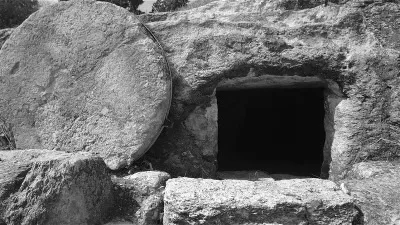
In John 20:1–10, the resurrection narrative begins with Mary Magdalene discovering the empty tomb and informing Peter and the beloved disciple (vv. 1–2). John highlights the reality of the empty tomb through their careful observation, preparing the way for faith rooted in eyewitness testimony, even before a full understanding of Scripture emerges.
Early on the first day of the week, while it is still dark, Mary Magdalene visits the tomb and finds the stone removed (v. 1). Alarmed, she runs to tell Peter and the beloved disciple, who immediately hurry to the tomb (v. 2). Peter enters first and observes the linen wrappings lying there, with the cloth that had covered Jesus’ head rolled up separately (vv. 6–7). This suggests deliberate action rather than theft.
The beloved disciple follows, sees, and believes (v. 8), though a full understanding of Scripture and the resurrection is still unfolding. John emphasises the historical reality of the empty tomb, the careful observation of Jesus’ followers, and the intentionality of His rising, establishing the foundation for recognising His victory over death.
Jesus Appears to Mary Magdalene
¹¹ But Mary stood weeping outside the tomb, and as she wept she stooped to look into the tomb. ¹² And she saw two angels in white, sitting where the body of Jesus had lain, one at the head and one at the feet. ¹³ They said to her, “Woman, why are you weeping?” She said to them, “They have taken away my Lord, and I do not know where they have laid him.” ¹⁴ Having said this, she turned around and saw Jesus standing, but she did not know that it was Jesus. ¹⁵ Jesus said to her, “Woman, why are you weeping? Whom are you seeking?” Supposing him to be the gardener, she said to him, “Sir, if you have carried him away, tell me where you have laid him, and I will take him away.”
¹⁶ Jesus said to her, “Mary.” She turned and said to him in Aramaic, “Rabboni!” (which means Teacher). ¹⁷ Jesus said to her, “Do not cling to me, for I have not yet ascended to the Father; but go to my brothers and say to them, ‘I am ascending to my Father and your Father, to my God and your God.’” ¹⁸ Mary Magdalene went and announced to the disciples, “I have seen the Lord”—and that he had said these things to her.
Jesus Appears to Mary (vv. 11–18)
Section titled “Jesus Appears to Mary (vv. 11–18)”Jesus’ appearances in vv. 11–29 unfold after the discovery of the empty tomb, as the risen Christ reveals Himself first to Mary Magdalene and then to the gathered disciples. The narrative culminates in Jesus’ appearance to Thomas, whose confession, “My Lord and my God,” highlights the call to faith grounded in witness rather than sight.
In vv. 11–18, Mary sees two angels in white, seated where Jesus’ body had been, one at His head and one at His feet (v. 12). This imagery evokes the mercy seat of the Old Testament, where two cherubim faced each other above the Ark, with the tomb functioning as a miniature tabernacle. Just as the mercy seat marked God’s presence above the ark (Ex 25:17–22), the tomb becomes the sacred space where God’s redemptive work through the risen Christ is revealed.
After discovering the empty tomb, Mary Magdalene remains outside weeping, grieving over Jesus’ death and the missing body (v. 11). Inside the tomb, she sees two angels who ask why she is weeping, and she explains her sorrow (vv. 13–14).
Turning, she encounters a man she does not recognise and mistakes Him for the gardener, until He speaks her name: “Mary” (v. 16). At that moment, she recognises Him as Jesus and calls Him “Rabboni!”—Teacher (v. 16).
Jesus then commissions her to go to the disciples and announce His resurrection, making her the first messenger of the risen Lord (v. 17). John emphasises the personal encounter, the transformative power of hearing Jesus’ voice, and Mary’s pivotal role as witness to the resurrection.
“I have seen the Lord” (v. 18)
Section titled ““I have seen the Lord” (v. 18)”Seeing is believing. The Christian faith is rooted in the historical reality of Jesus of Nazareth, specifically His life, crucifixion, and resurrection, all presented as verified events. The resurrection was attested to by Mary Magdalene and the disciples, whose lives were transformed (v. 18).
Jesus Appears to the Disciples
¹⁹ On the evening of that day, the first day of the week, the doors being locked where the disciples were for fear of the Jews, Jesus came and stood among them and said to them, “Peace be with you.” ²⁰ When he had said this, he showed them his hands and his side. Then the disciples were glad when they saw the Lord. ²¹ Jesus said to them again, “Peace be with you. As the Father has sent me, even so I am sending you.” ²² And when he had said this, he breathed on them and said to them, “Receive the Holy Spirit. ²³ If you forgive the sins of any, they are forgiven them; if you withhold forgiveness from any, it is withheld.”
Jesus Appears to His Disciples (vv. 19–23)
Section titled “Jesus Appears to His Disciples (vv. 19–23)”Locked doors cannot keep Jesus out. The risen Jesus appears to His disciples despite the doors being locked for fear of the Jewish leaders (v. 19).
“Peace be with you” was a common greeting in Jesus’ time. After His resurrection, it carries a deeper meaning, offering reassurance, comfort, and the presence of God as He empowers His disciples for their mission (v. 19).
The phrase appears three times in John, each during a post-resurrection appearance of Jesus. In v. 19, He greets the disciples on the evening of His resurrection, offering them comfort and reassurance. In v. 21, He repeats the greeting as He commissions them for their mission. A week later, in v. 26, He says it again when appearing to Thomas and the other disciples, reaffirming both His presence and the gift of peace that flows from the risen Lord. Each instance underscores the gift of peace, reassurance, and commissioning that comes from the risen Lord.
On the evening of the first day of the week, while the disciples are gathered behind locked doors in fear, Jesus appears among them and greets them with, “Peace be with you” (v. 19). He shows them His hands and side, providing tangible proof of His resurrection, and the disciples rejoice at seeing the Lord. Jesus commissions them, saying, “As the Father has sent me, even so I am sending you” (v. 21), and breathes on them, declaring, “Receive the Holy Spirit,” granting them authority to forgive or retain sins (v. 22). John emphasises both the reality of Jesus’ resurrection and the disciples’ transformation from fear to mission, showing that the risen Lord empowers them through the Spirit to continue His work in the world.
Jesus and Thomas
²⁴ Now Thomas, one of the twelve, called the Twin, was not with them when Jesus came. ²⁵ So the other disciples told him, “We have seen the Lord.” But he said to them, “Unless I see in his hands the mark of the nails, and place my finger into the mark of the nails, and place my hand into his side, I will never believe.” ²⁶ Eight days later, his disciples were inside again, and Thomas was with them. Although the doors were locked, Jesus came and stood among them and said, “Peace be with you.” ²⁷ Then he said to Thomas, “Put your finger here, and see my hands; and put out your hand, and place it in my side. Do not disbelieve, but believe.” ²⁸ Thomas answered him, “My Lord and my God!” ²⁹ Jesus said to him, “Have you believed because you have seen me? Blessed are those who have not seen and yet have believed.”
Jesus Appears to His Disciples Including Thomas (vv. 24–29)
Section titled “Jesus Appears to His Disciples Including Thomas (vv. 24–29)”Eight days after His first appearance, Jesus appears again to the disciples, with Thomas present (v. 24). Thomas, who had expressed doubt, is invited to examine Jesus’ hands and side. Jesus says to him, “Do not disbelieve, but believe” (v. 27). Confronted with the risen Lord, Thomas responds, “My Lord and my God!” (v. 28). Jesus affirms his faith and pronounces a blessing on those who believe without seeing (v. 29), emphasising the nature of faith in the post-resurrection community. John highlights the transformation from doubt to worship, the reality of Jesus’ resurrection.
Belief and Unbelief in the Book of Glory
Section titled “Belief and Unbelief in the Book of Glory”John 12 marks a critical turning point in which the religious authorities and the crowds solidify their rejection of Jesus, closing their final opportunity to place their faith in Him (12:37–43). These verses directly address the “tragedy of unbelief” and explain why, despite many signs, the people did not believe in Jesus, citing Isaiah’s prophecy.
There is continued resistance throughout John 13–21. While the focus shifts to discipleship, the rejection of Jesus by “the world,” which is rooted in unbelief, continues to be implied, as Jesus prepares His disciples to face the same hatred.
At the climax of the Book of Glory, Thomas shows a momentary doubt, which Jesus confronts, resulting in Thomas’ profound confession of faith. Jesus then pronounces a blessing on “those who have not seen and yet have believed” (v. 29), connecting the original disciples to all future readers of John’s Gospel.
The theme of belief also frames the entire Gospel. At the beginning: “To all who received him, who believed in His name, He gave the right to become children of God” (1:12), and at the end: “These are written so that you may believe…” (20:31). The Gospel begins with belief and ends with the invitation to believe.
John invites every reader to take the journey towards believing in Jesus as God Himself. That is why the Gospel concludes with its purpose statement: “These are written so that you may believe that Jesus is the Christ, the Son of God, and that by believing you may have life in His name” (20:31).
The Water Motif in the Book of Glory
Section titled “The Water Motif in the Book of Glory”Though John 1–12 develops the water motif, it climaxes at the cross. This is seen in 19:34, where “one of the soldiers pierced His side with a spear, and at once there came out blood and water.”
Water symbolises purification, life, and the Spirit, linking the death of Jesus to the spiritual life He gives. The living water of faith that Jesus spoke about now flows from His sacrifice, offering eternal life.
The Purpose of the Gospel of John (20:30–31)
Section titled “The Purpose of the Gospel of John (20:30–31)”The Purpose of This Book
³⁰ Now Jesus did many other signs in the presence of the disciples, which are not written in this book; ³¹ but these are written so that you may believe that Jesus is the Christ, the Son of God, and that by believing you may have life in his name.
John 20:30–31 serves as the purpose statement of the Gospel, explaining that the recorded signs are written to lead readers to believe that Jesus is the Christ, the Son of God, and that by believing, they may receive life in His name. John notes that Jesus performed many other signs not recorded in the text.
The ones included were carefully selected to reveal His identity as the Son of God (v. 30). These accounts aim to lead readers to believe in Jesus and, as a result of that faith, receive life in His name.
John underscores that his Gospel is not a comprehensive biography but a selective account designed to draw readers into a personal encounter with Jesus, making belief and life inseparable outcomes of engaging with his testimony (v. 31).
Textual Variant
Section titled “Textual Variant”“That you may believe” / “that you may come to believe” (v. 31)
Section titled ““That you may believe” / “that you may come to believe” (v. 31)”John 20:31 has two Greek readings: “that you may believe” and “that you may come to believe.” The first emphasises the confirmation of faith for existing believers, while the second highlights the call for new readers to place their faith in Jesus.
Both readings demonstrate John’s dual purpose: to strengthen the faith of current disciples and to invite others to believe in Jesus as the Son of God, encompassing both discipleship and evangelism.
Preaching and Teaching the Word
Section titled “Preaching and Teaching the Word”Teaching the Resurrection
John 20, along with Mark 16:1–8, Matt 28, Luke 24, and 1 Cor 15:5–8, shows Christ’s post-resurrection appearances. These accounts reveal His victory over death, personal encounters with His disciples, and commissioning to teach and witness. Emphasise the reality of the resurrection, its transforming power, and invite believers to deepen their faith and share the hope of the risen Lord with others.
The Great Commission in John (20:19–23)
Offers a renewed understanding of mission. In John, sending is central: God sends Jesus, and Jesus sends His disciples. This passage highlights the empowering work of the Holy Spirit and the call to join in God’s mission, reminding believers that following Christ means being sent to share His love, truth, and reconciliation with the world.
An Honest Doubter (20:24–29)
Preach Thomas as the honest doubter whom Jesus meets with grace. Show how doubt can lead to deeper faith when brought to Christ. Emphasise Jesus’ invitation to believe and His blessing on unseen faith (v. 29), calling hearers to trust the risen Lord through credible witness rather than sight alone.