Part 1 03 — Literary Features
Literary Features
Section titled “Literary Features”The Gospel of John uses several literary devices, including symbolism, irony, and metaphor, to convey its spiritual and theological messages. Other prominent devices include repeated keywords, misunderstandings (often based on literal versus spiritual interpretation), and a specific literary structure.
Main Symbols
Section titled “Main Symbols”Bread, light, and water function as central symbols in the Gospel of John, through which the evangelist communicates deep theological truths about Jesus’ identity and the gift of eternal life. Rooted in the Exodus story, these images recall God’s provision and guidance during Israel’s journey from bondage in Egypt to the Promised Land. Throughout the Gospel, John repeatedly employs these symbols, often in close connection with Jesus’ seven “I Am” sayings and the seven signs, to reveal Jesus as the fulfiller of those earlier saving acts in Exodus.
Bread Symbolism
Section titled “Bread Symbolism”Bread was given daily as manna, falling from heaven each morning except on the Sabbath, and for forty years it sustained the Israelites in the wilderness. This miraculous provision was known as “bread from heaven.” In the Gospel of John, the symbolism of bread is concentrated almost entirely in the Bread of Life discourse in John 6.
Light Symbolism
Section titled “Light Symbolism”“Light” is perhaps the most characteristic symbol in John’s Gospel. Alongside “darkness” and “life,” it forms a network of images that echo God’s creative work “in the beginning.” In John, light is ultimately an attribute of God himself, an attribute made visible in Jesus, the true light who came into the world (1:9–11; 1:18; 14:9). This imagery also recalls the Exodus, where the pillar of cloud by day and the pillar of fire by night signified God’s presence. In particular, the pillar of fire provided continual light, serving as a divine guide for Israel’s journey and a tangible sign that God dwelt among his people.
“Life” and “Light”
Section titled ““Life” and “Light””“In him was life, and that life was the light of all mankind” (1:4). This statement at the beginning of John’s prologue links the two important Johannine terms “life” and “light.”
In the Genesis narrative of God’s creation of the world, by his Word, God places lights in the sky to separate light and darkness (Gen 1:14-18). This light, in turn, makes life possible. Thus, on creation days 5 and 6, God calls forth living creatures in the water and on the land (Gen 1:20-31), culminating in his creation of man (Gen 1:26-28; 2:7; 3:20).
The crying need was for human beings to be restored to life, “eternal life,” and light, that is, liberation from the power of sin. In John’s theology, life and light are inseparably linked.
Water Symbolism²
Section titled “Water Symbolism²”Water is a prominent and recurring symbol throughout John’s Gospel, representing spiritual cleansing, new life, and the work of the Holy Spirit. It appears in a variety of forms, including conversations about water, water pots, rivers, wells, springs, the sea, pools, basins, thirst, and drinking, making it a unifying motif that runs throughout the narrative. This symbolism reaches its climax at the crucifixion, when both water and blood flow from Jesus’ side.³
Key passages highlighting water include 1:26, 31, 33; 3:23 (John the Baptist’s baptism), 2:1, 6-10 (turning water into wine), 3:5 (born of water and Spirit), 5:2, 7; 9:6-11 (healings at the pools of Bethesda and Siloam), 6:16-19 (Jesus walking on water), 13:4-12 (foot washing), and 21:7 (Peter jumping into the water at Jesus’ appearance).
Water Symbol and Jewish Water Purification Ritual
Section titled “Water Symbol and Jewish Water Purification Ritual”In the Gospel of John, water serves as a rich and multi-layered symbol, deeply rooted in Jewish purification practices and reinterpreted through a Christ-centred lens.
John presents purification as ultimately found in Jesus. At Cana, he transforms water for Jewish purification into wine, pointing to a deeper cleansing. With Nicodemus, being “born of water and the Spirit” signals spiritual renewal beyond ritual washing. At the well, he offers the Samaritan woman “living water” that satisfies eternally. He models ongoing cleansing through foot-washing at the Last Supper, and at the cross, blood and water from his side reveal that true purification and new life come not from ritual water, but through Christ’s sacrifice and the gift of the Spirit.
The Mikveh
Section titled “The Mikveh”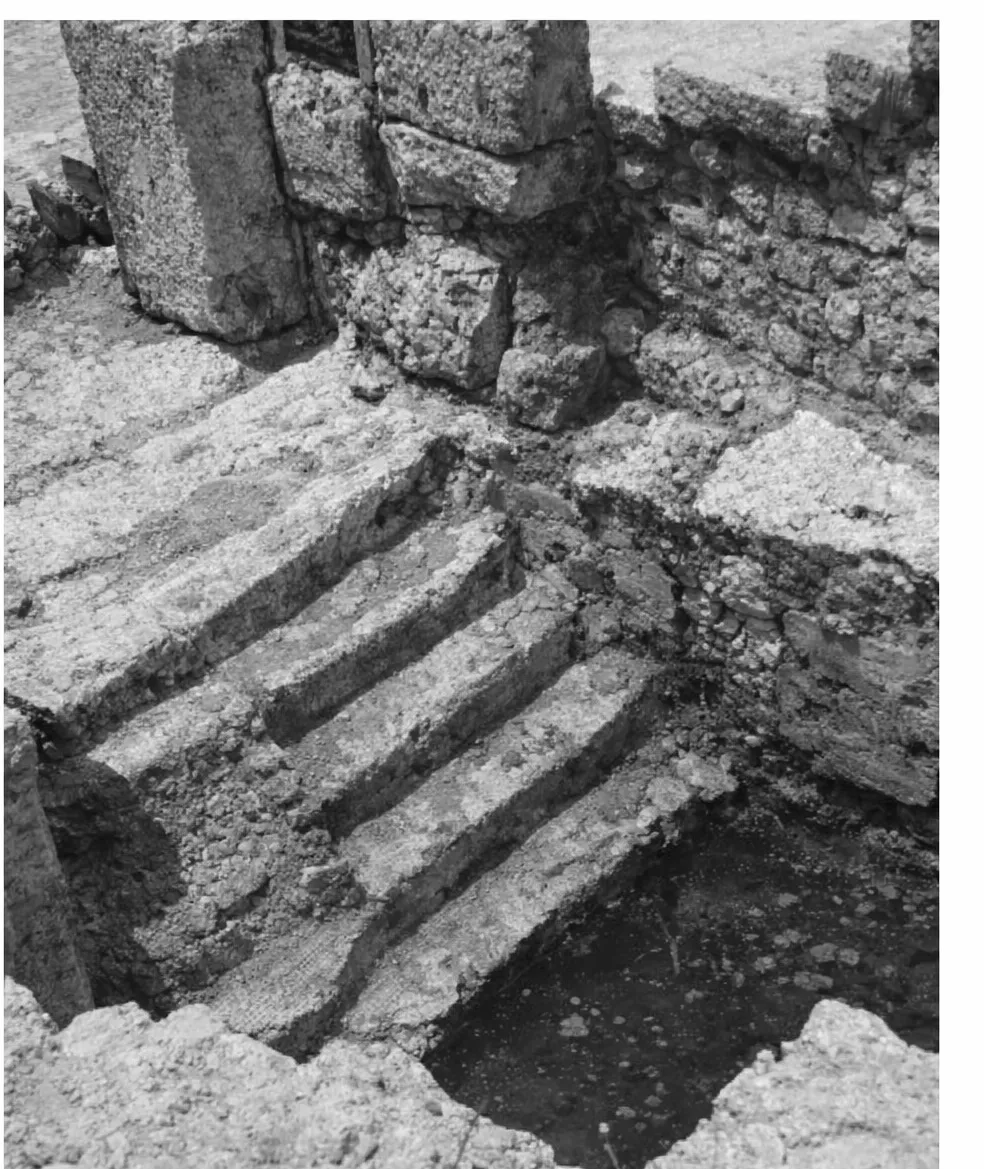
The mikveh pools were used for Jewish ritual purity washings.
A mikveh (or mikvah) is a Jewish ritual bath used for purification, involving full immersion in naturally sourced water (rain, spring, or ocean) to achieve spiritual cleansing.
John’s narrative includes several references to Jewish ritual washing practices and pools of water that are understood by scholars and the contemporary Jewish audience to be places where mikveh immersion occurred. These implied mikvehs or references to ritual purification in John’s Gospel include the Pool of Bethesda (5:1–13), the Pool of Siloam (9:1–7), John the Baptist’s ministry at the Jordan River (1:19–34; 3:23), and the Sea of Galilee, where Peter jumps into the water as he and others hurry ashore to meet the risen Jesus (21:1–7). These scenes evoke Jewish practices of cleansing and renewal, reinforcing the theme of water as symbolic of spiritual purification that finds its fulfilment in Christ.
References to Time
Section titled “References to Time”Both Jews and non-Jews in the first century AD counted time from sunrise (6 a.m.) to sunset (6 p.m.). As Jesus himself says, “Are there not twelve hours of daylight” (11:9). Thus, when the original Greek says, “It was the tenth hour,” that means it was 4 p.m. (6 a.m. + 10 hours).
“The Hour”
Section titled ““The Hour””A central theme in John’s Gospel is “the hour,” the climactic moment when Jesus’ identity and mission are fully revealed. Unlike the Synoptics’ chronological focus, John emphasises a theological timeline in which every word, sign, and “I Am” saying points toward this hour. The turning point comes in John 12:23, when Jesus declares, “The hour has come for the Son of Man to be glorified,” leading to the Last Supper and His prayer in John 17:1. Throughout, the hour unites the Gospel, revealing God’s glory and the redemption of the world through Christ.
Believe — A Keyword in John
Section titled “Believe — A Keyword in John”The word “believe” (pisteuō) is widely considered a key word and a central theme in the Gospel of John. The apostle John uses the verb form of “believe” 98 times, which is more than all the other New Testament Gospels combined. The significance is highlighted in John’s purpose statement for writing his Gospel: “But these are written that you may believe that Jesus is the Christ, the Son of God, and that by believing you may have life in his name” (John 20:31).
Dialogue and Monologue
Section titled “Dialogue and Monologue”The Gospel of John is distinct from the other Gospels due to its prominent use of extended dialogues (conversations between Jesus and others) and substantial monologues (long speeches by Jesus). These literary devices serve to develop the narrative, explore theological themes, and intensify conflict.
Dialogues in John
Section titled “Dialogues in John”In Johannine dialogues, an individual or group often begins with a limited or mistaken understanding of Jesus, which leads Him to unfold deeper spiritual truth through His teaching. Each dialogue progressively unveils Jesus’ identity, moving readers toward the climactic confession: “My Lord and my God” (20:28).
John records seven major dialogues between Jesus and various individuals or groups. These include his conversations with Nicodemus and the Samaritan woman, as well as extended exchanges with the Jewish crowd, and repeated confrontations with the Jewish authorities, sometimes together with the crowd.
Monologues in John
Section titled “Monologues in John”John’s Gospel also features four extended monologues, or discourses, in which Jesus speaks at length with little or no interruption. These include his discourse on the identity and authority of the Son of God, the teaching on the shepherd and the sheep, the pivotal discourse in which Jesus declares that “the hour has come,” and the Farewell Discourse, where Jesus prepares his disciples for his departure.
Major Dialogues and Monologues
| No. | Dialogues with Jesus | Monologues of Jesus |
|---|---|---|
| 1 | Nicodemus (3:1-21) | The Identity of (the Son of) God (5:19-47) |
| 2 | Samaritan Woman (4:1-42) | The Shepherd and the Sheep (10:1-21) |
| 3 | Jewish Crowd (6:22-71) | "The Hour has Come" (12:20-50) |
| 4 | Jewish Authorities and the Jewish Crowd (7:14-52) | The Farewell Discourse (13:31-16:33) |
| 5 | Jewish Authorities (8:12-59) | |
| 6 | Jewish Authorities (9:1-41) | |
| 7 | Jewish Crowd (10:22-42) |