Part 2 03 — From Jerusalem to Bethany
From Jerusalem to Bethany: The Festival Cycle
Section titled “From Jerusalem to Bethany: The Festival Cycle”(5:1–10:42)
After the Cana Cycle (John 2–4), Jesus enters the Festival Cycle (John 5–10), moving between Jerusalem and its surrounding regions, including Bethany.
This section opens with the healing of a lame man at the Pool of Bethesda in Jerusalem on the Sabbath. Around Passover, Jesus feeds the multitude and later teaches in Capernaum about the bread from heaven. During the Feast of Tabernacles in Jerusalem, He engages in extended debates with the religious authorities and restores sight to a man born blind. At the Feast of Dedication, now known as Hanukkah, He reveals Himself as the shepherd of His people. The cycle reaches its summit with the raising of Lazarus, an event that paves the way for His triumphal entry into Jerusalem and speeds the progression toward the cross.
John 5
Section titled “John 5”The second phase of Jesus’ ministry in Jerusalem begins in John 5, highlighted by two significant miracles of healing, the restoration of the lame man and the healing of the man born blind in John 9. The Feast of Tabernacles is sandwiched between these two healing miracles.
Following the healing of the lame man, Jesus delivers an extended discourse in which He explains His authority and addresses the controversy surrounding the Sabbath.
Places and People Profile
Section titled “Places and People Profile”Place Profile
Section titled “Place Profile”- Bethesda: A spring-fed pool surrounded by five porches. It is located in the northeast part of the city. In 1888, archaeological work uncovered two large pools, five porches, and numerous fragments of marble columns. The same excavation also revealed a fresco of an angel in the act of troubling the waters.
People Profile
Section titled “People Profile”- Moses: A member of the tribe of Levi and brother of Aaron and Miriam. He was raised in Egypt for forty years by Pharaoh’s daughter and then lived forty years in the desert of Midian. At the age of eighty, he was called by God to deliver Israel from Egyptian bondage. He died at the age of 120 before entering the Promised Land.
The Third Sign: The Healing of the Lame Man at Bethesda (5:1–18)
Section titled “The Third Sign: The Healing of the Lame Man at Bethesda (5:1–18)”The Healing at the Pool on the Sabbath
1 After this there was a feast of the Jews, and Jesus went up to Jerusalem. 2 Now there is in Jerusalem by the Sheep Gate a pool, in Aramaic called Bethesda, which has five roofed colonnades. 3 In these lay a multitude of invalids—blind, lame, and paralyzed. 5 One man was there who had been an invalid for thirty-eight years. 6 When Jesus saw him lying there and knew that he had already been there a long time, he said to him, “Do you want to be healed?” 7 The sick man answered him, “Sir, I have no one to put me into the pool when the water is stirred up, and while I am going another steps down before me.” 8 Jesus said to him, “Get up, take up your bed, and walk.” 9 And at once the man was healed, and he took up his bed and walked.
Now that day was the Sabbath. 10 So the Jews said to the man who had been healed, “It is the Sabbath, and it is not lawful for you to take up your bed.” 11 But he answered them, “The man who healed me, that man said to me, ‘Take up your bed, and walk.’” 12 They asked him, “Who is the man who said to you, ‘Take up your bed and walk’?”
13 Now the man who had been healed did not know who it was, for Jesus had withdrawn, as there was a crowd in the place. 14 Afterward Jesus found him in the temple and said to him, “See, you are well! Sin no more, that nothing worse may happen to you.” 15 The man went away and told the Jews that it was Jesus who had healed him. 16 And this was why the Jews were persecuting Jesus, because he was doing these things on the Sabbath. 17 But Jesus answered them, “My Father is working until now, and I am working.” 18 This was why the Jews were seeking all the more to kill him, because not only was he breaking the Sabbath, but he was even calling God his own Father, making himself equal with God.
The Pool of Bethesda (v. 2)
Section titled “The Pool of Bethesda (v. 2)”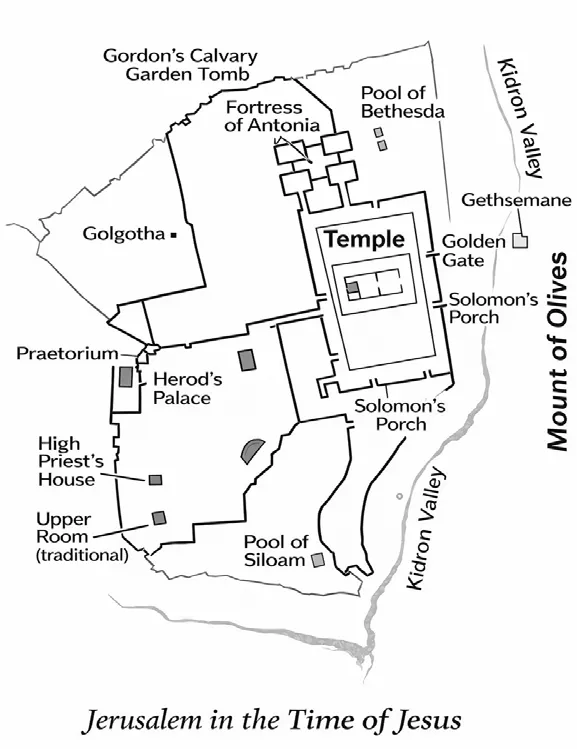
The mention of the pool of Bethesda in this passage and of the pool of Siloam in John 9 highlights the importance of immersion pools (mikveh) in the religious life of the Jews in Jerusalem.
The Pool of Bethesda, where Jesus healed a lame man, was a large public mikveh used by pilgrims for purification before entering the Temple.
This miracle provokes controversy with Jewish leaders, highlighting the tension between Jesus’ authority and traditional Sabbath regulations.
Healing at the Pool of Bethesda (vv. 1–9)
Section titled “Healing at the Pool of Bethesda (vv. 1–9)”The third sign, the healing of the lame man at the Pool of Bethesda, marks the second phase of Jesus’ ministry in Jerusalem. Like His first sign at Cana, this miracle demonstrates Jesus’ authority over human limitation. Unlike earlier narratives where water carries central symbolic meaning, the pool here serves mostly as a backdrop. Water appears only once, yet it underscores a recurring theme that human or ritual means alone cannot bring true healing. Jesus arrives in Jerusalem for a Jewish feast (v. 1) and encounters a man who had been lame for thirty-eight years (v. 5). The Pool of Bethesda, with its porches and baths, was regarded as a place where healing occurred when the waters were stirred. The man complains that he has no one to help him enter at the right moment (v. 7).
Jesus asks, “Do you want to be healed?” and heals him with His word alone (vv. 6–9).
Later, in the Temple, Jesus finds the man and warns him, “See, you are well! Sin no more, that nothing worse may happen to you” (v. 14). This is the first instance in John’s Gospel where sin is directly linked to sickness, highlighting that Jesus’ mission encompasses both healing and salvation.
The narrative also reveals a broader truth. Witnessing Jesus’ power does not automatically produce faith. Although the lame man is healed, he fails to recognize Jesus as the one who healed him. Physical restoration alone is not enough for spiritual insight.
The Sabbath Law Forbade Carrying a Mat (vv. 10–18)
Section titled “The Sabbath Law Forbade Carrying a Mat (vv. 10–18)”Healing came to the man when he obeyed Jesus’ command to take up his mat and walk. Because he was carrying his mat on the Sabbath, the Jews (religious leaders) accused him of breaking the Sabbath. The Mishnah⁷ lists thirty-nine categories of prohibited activities on the Sabbath, and carrying an object such as a mat was considered one of them.
Verse 18 marks a turning point as the Jewish leaders begin seeking to kill Jesus, not only because He appeared to break the Sabbath but also because of calling God His own Father. Jesus speaks in a way that implies a unique relationship with the Father. To them, this means that He is making Himself equal with God.
The Sabbath Controversy (5:19–47)
Section titled “The Sabbath Controversy (5:19–47)”The Authority of the Son
19 So Jesus said to them, “Truly, truly, I say to you, the Son can do nothing of his own accord, but only what he sees the Father doing. For whatever the Father does, that the Son does likewise. 20 For the Father loves the Son and shows him all that he himself is doing. And greater works than these will he show him, so that you may marvel. 21 For as the Father raises the dead and gives them life, so also the Son gives life to whom he will. 22 For the Father judges no one, but has given all judgment to the Son, 23 that all may honor the Son, just as they honor the Father. Whoever does not honor the Son does not honor the Father who sent him. 24 Truly, truly, I say to you, whoever hears my word and believes him who sent me has eternal life. He does not come into judgment, but has passed from death to life.
25 “Truly, truly, I say to you, an hour is coming, and is now here, when the dead will hear the voice of the Son of God, and those who hear will live. 26 For as the Father has life in himself, so he has granted the Son also to have life in himself. 27 And he has given him authority to execute judgment, because he is the Son of Man. 28 Do not marvel at this, for an hour is coming when all who are in the tombs will hear his voice 29 and come out, those who have done good to the resurrection of life, and those who have done evil to the resurrection of judgment.
The First Monologue: The Identity of the Son of God (vv. 19–47)
Section titled “The First Monologue: The Identity of the Son of God (vv. 19–47)”This is the first of four major monologues of Jesus. In it, He asserts His divine authority and oneness with the Father, teaching that His works, words, and judgment reveal God’s glory and summon people to place their faith in Him.
The monologue consists of two parts: didactic and polemic. In the first part (vv. 19–29), Jesus explains His relation to God. In the second (vv. 30–47), He points to three witnesses to the truth of what he says and challenges the Jewish authorities for rejecting Him.
Jesus’ Authority (vv. 19–29)
Section titled “Jesus’ Authority (vv. 19–29)”John 5:19–29 highlights the Son’s unique authority, rooted in His perfect unity with the Father. Jesus declares, “Truly, truly, I say to you, the Son can do nothing of his own accord, but only what he sees the Father doing” (v. 19), showing His complete alignment with the Father’s will. In this dependence, He exercises divine power to give life and execute judgment (vv. 21–22). He raises the dead and grants eternal life to all who believe (vv. 24–25), while those who reject Him face condemnation (vv. 28–29). His works reveal the Father, His words bring life, and His authority demands faith and reverence (vv. 21–23, 36).
Witnesses to Jesus
30 “I can do nothing on my own. As I hear, I judge, and my judgment is just, because I seek not my own will but the will of him who sent me. 31 If I alone bear witness about myself, my testimony is not true. 32 There is another who bears witness about me, and I know that the testimony that he bears about me is true. 33 You sent to John, and he has borne witness to the truth. 34 Not that the testimony that I receive is from man, but I say these things so that you may be saved. 35 He was a burning and shining lamp, and you were willing to rejoice for a while in his light. 36 But the testimony that I have is greater than that of John. For the works that the Father has given me to accomplish, the very works that I am doing, bear witness about me that the Father has sent me.
37 And the Father who sent me has himself borne witness about me. His voice you have never heard, his form you have never seen, 38 and you do not have his word abiding in you, for you do not believe the one whom he has sent. 39 You search the Scriptures because you think that in them you have eternal life; and it is they that bear witness about me, 40 yet you refuse to come to me that you may have life. 41 I do not receive glory from people. 42 But I know that you do not have the love of God within you. 43 I have come in my Father’s name, and you do not receive me. If another comes in his own name, you will receive him. 44 How can you believe, when you receive glory from one another and do not seek the glory that comes from the only God? 45 Do not think that I will accuse you to the Father. There is one who accuses you: Moses, on whom you have set your hope. 46 For if you believed Moses, you would believe me; for he wrote of me. 47 But if you do not believe his writings, how will you believe my words?“
The Witnesses Concerning Jesus (5:30–47)
Section titled “The Witnesses Concerning Jesus (5:30–47)”Jesus’ identity is confirmed through the testimony of several witnesses, yet human responses differ. He says, “I can do nothing on my own” (v. 30), acting in perfect unity with the Father. His works reveal divine authority (v. 36), while John the Baptist testifies to Him (v. 33), Scripture bears witness (vv. 39–40), and the Father Himself confirms Him (vv. 37, 44). Despite these testimonies, many reject Him, seeking human approval over God’s glory. True acceptance requires trust, obedience, and alignment with God’s purpose (vv. 24, 29). Jesus fulfils Scripture and offers life to all who believe (vv. 24–25).
Textual Variant
Section titled “Textual Variant”The Stirring of the Water (5:3b–4)
Section titled “The Stirring of the Water (5:3b–4)”The textual variant concerns the description of an angel descending to stir the waters at the pool of Bethesda, granting healing, and serves as an explanatory note. However, this passage is missing from the earliest and most reliable manuscripts. Most scholars regard it as a later addition, likely drawn from circulating traditions or inserted to clarify how healing was believed to occur at the pool.
Preaching and Teaching the Word
Section titled “Preaching and Teaching the Word”Do You Want to Get Well? (5:6)
Verse 6 poses a powerful question that challenges us to examine the spiritual stagnation that can take hold during long seasons of suffering. It also highlights Jesus’ sovereign authority to go beyond human rules, including the Sabbath, to bring true healing, restoration, and abundant life.
Sin No More (5:14)
Jesus twice calls individuals to move forward in obedience with the words “sin no more” (5:14; 8:11). A comparison between the healed lame man and the woman caught in adultery, and the different contexts of sin in these narratives, offers rich material for insightful teaching or preaching.
Healing on the Sabbath (5:9–10)
A sermon could explore the controversy over Jesus’ healing on the Sabbath, highlighting the tension between human rules and God’s authority. Emphasise how Jesus challenges rigid legalism, showing that the Sabbath exists for life, mercy, and restoration. Encourage believers to value compassion over rules and to embrace Jesus’ power to bring true wholeness.
John 6
Section titled “John 6”In John 6, the longest chapter of the Gospel, we see a blend of miracles, teachings, and controversies. John recounts the feeding of the five thousand, pointing to a new Passover; describes Jesus walking on water, evoking the imagery of a new exodus; and presents the Bread of Life discourse, unveiling the new covenant. The chapter concludes with the crowd’s varied reactions to Jesus’ words.
Places and People Profile
Section titled “Places and People Profile”Place Profile
Section titled “Place Profile”- Sea of Galilee: A large inland lake located about sixty miles north of Jerusalem. It begins at the Jordan River in the north and flows into the Dead Sea. The lake is up to 150 feet deep at certain points. In Jesus’ time, it was surrounded by approximately thirty fishing villages.
- Tiberias: The capital city of Herod Antipas, tetrarch of Galilee and Perea. It was built between AD 16 and 22. Ruins include portions of a wall three miles long, a palace, a forum, and a large synagogue.
People Profile
Section titled “People Profile”- Judas Iscariot: “Iscariot” is usually taken to mean “a man of Kerioth,” an area in the south of Judah. He is mentioned in John 6, 12, 13, and 18 and betrayed Jesus for thirty pieces of silver.
- Joseph: Married to Jesus’ mother, Mary. He was a carpenter from Nazareth, descended from the line of David. He was spoken to by angels regarding the birth and early childhood of Jesus (Matt 1:18–25; Luke 2:8–20). He probably died sometime between the beginning of Jesus’ ministry and the crucifixion.
The Fourth Sign: The Feeding of the Five Thousand (6:1–15)
Section titled “The Fourth Sign: The Feeding of the Five Thousand (6:1–15)”Jesus Feeds the Five Thousand
1 After this Jesus went away to the other side of the Sea of Galilee, which is the Sea of Tiberias. 2 And a large crowd was following him, because they saw the signs that he was doing on the sick. 3 Jesus went up on the mountain, and there he sat down with his disciples. 4 Now the Passover, the feast of the Jews, was at hand. 5 Lifting up his eyes, then, and seeing that a large crowd was coming toward him, Jesus said to Philip, “Where are we to buy bread, so that these people may eat?”
6 He said this to test him, for he himself knew what he would do. 7 Philip answered him, “Two hundred denarii worth of bread would not be enough for each of them to get a little.” 8 One of his disciples, Andrew, Simon Peter’s brother, said to him, 9 “There is a boy here who has five barley loaves and two fish, but what are they for so many?”
10 Jesus said, “Have the people sit down.” Now there was much grass in the place. So the men sat down, about five thousand in number. 11 Jesus then took the loaves, and when he had given thanks, he distributed them to those who were seated. So also the fish, as much as they wanted. 12 And when they had eaten their fill, he told his disciples, “Gather up the leftover fragments, that nothing may be lost.” 13 So they gathered them up and filled twelve baskets with fragments from the five barley loaves left by those who had eaten. 14 When the people saw the sign that he had done, they said, “This is indeed the Prophet who is to come into the world!” 15 Perceiving then that they were about to come and take him by force to make him king, Jesus withdrew again to the mountain by himself.
When John writes that “Jesus went away to the other side of the Sea of Galilee” (v. 1), he means that Jesus and his disciples crossed the lake, most likely from the western side (around Capernaum) to the northeastern side, a more remote area where the feeding of the five thousand took place. Luke 9:10 says the miracle occurred near Bethsaida.
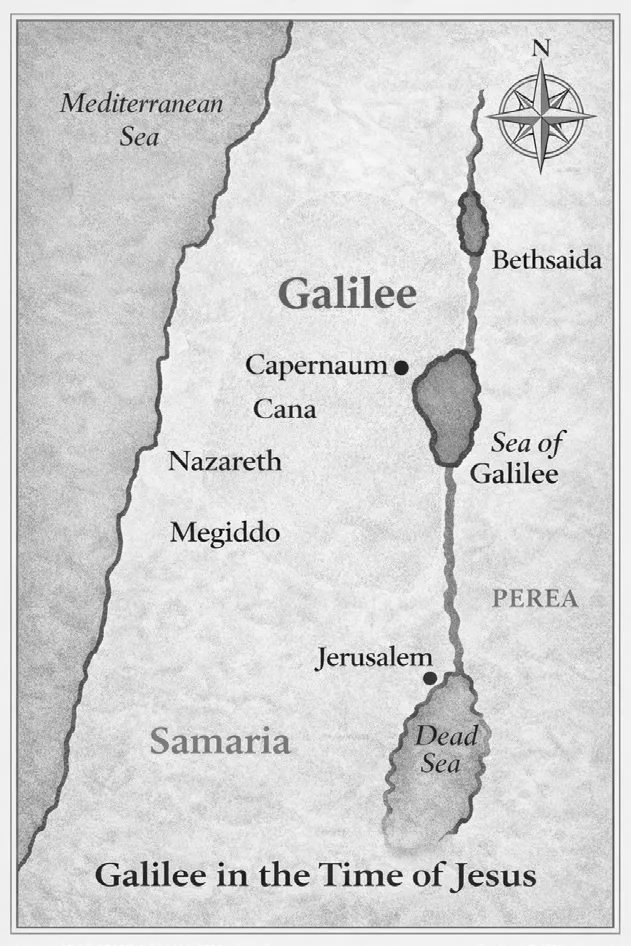
The fourth sign recounts the feeding of the five thousand, revealing Jesus’ compassion and divine provision. John notes that the Passover was near, a festival that reminded Israel of God’s deliverance from Egypt and His provision of manna in the wilderness.
Against this backdrop, a large crowd follows Jesus. Seeing their need, He tests His disciples and involves them in feeding the people. With only five barley loaves and two fish offered by a boy, Jesus gives thanks and distributes the food, and the entire crowd eats until satisfied.
Twelve baskets of leftovers remain (v. 13), displaying the abundance of God’s provision. The miracle echoes God’s gift of manna in the wilderness and points to Jesus as the true Bread from Heaven who sustains His people.
Misunderstanding the sign, the crowd seeks to make Him king by force. Jesus withdraws, showing that His mission is not political rule but bringing spiritual life.
The Fifth Sign: The Walking on the Water (6:16–21)
Section titled “The Fifth Sign: The Walking on the Water (6:16–21)”Jesus Walks on Water
16 When evening came, his disciples went down to the sea, 17 got into a boat, and started across the sea to Capernaum. It was now dark, and Jesus had not yet come to them. 18 The sea became rough because a strong wind was blowing. 19 When they had rowed about three or four miles, they saw Jesus walking on the sea and coming near the boat, and they were frightened. 20 But he said to them, “It is I; do not be afraid.” 21 Then they were glad to take him into the boat, and immediately the boat was at the land to which they were going.
That evening, the disciples sail toward Capernaum, struggling against wind and waves on the Sea of Galilee (vv. 16–18). Jesus walks on the water to reach them (v. 19), revealing His authority over nature and reassuring them of His divine presence. This fifth sign echoes the crossing of the Red Sea in the Exodus (Ex 14:21–22), where God delivered His people through the waters and displayed His saving power. Just as He brought Israel safely through the sea, Jesus now walks upon the waters, showing His mastery over creation and providing security amid life’s storms (v. 20).
The feeding of the five thousand (vv. 1–14) and Jesus’ walking on the water (vv. 16–21) recall the great Exodus events. Just as God provided manna in the wilderness (Ex 16:4–36) and parted the Red Sea for Israel (Ex 14:21–22), Jesus now feeds the crowd and rules the sea itself. These signs reveal His authority greater than Moses’ and His sovereign power over creation (vv. 14–21).
| John 6:1–15 | John 6:16–21 |
|---|---|
| Feeding the 5000 (Cf. Manna from Heaven) | Walking on Water (Cf. Crossing the Red Sea) |
Jesus’ Authority over Moses & the Creation
The Bread of Life Discourse (6:22–59)
Section titled “The Bread of Life Discourse (6:22–59)”I Am the Bread of Life
22 On the next day the crowd that remained on the other side of the sea saw that there had been only one boat there, and that Jesus had not entered the boat with his disciples, but that his disciples had gone away alone. 23 Other boats from Tiberias came near the place where they had eaten the bread after the Lord had given thanks. 24 So when the crowd saw that Jesus was not there, nor his disciples, they themselves got into the boats and went to Capernaum, seeking Jesus.
25 When they found him on the other side of the sea, they said to him, “Rabbi, when did you come here?” 26 Jesus answered them, “Truly, truly, I say to you, you are seeking me, not because you saw signs, but because you ate your fill of the loaves. 27 Do not work for the food that perishes, but for the food that endures to eternal life, which the Son of Man will give to you. For on him God the Father has set his seal.”
28 Then they said to him, “What must we do, to be doing the works of God?” 29 Jesus answered them, “This is the work of God, that you believe in him whom he has sent.” 30 So they said to him, “Then what sign do you do, that we may see and believe you? What work do you perform? 31 Our fathers ate the manna in the wilderness; as it is written, ‘He gave them bread from heaven to eat.’” 32 Jesus then said to them, “Truly, truly, I say to you, it was not Moses who gave you the bread from heaven, but my Father gives you the true bread from heaven. 33 For the bread of God is he who comes down from heaven and gives life to the world.” 34 They said to him, “Sir, give us this bread always.”
35 Jesus said to them, “I am the bread of life; whoever comes to me shall not hunger, and whoever believes in me shall never thirst. 36 But I said to you that you have seen me and yet do not believe. 37 All that the Father gives me will come to me, and whoever comes to me I will never cast out. 38 For I have come down from heaven, not to do my own will but the will of him who sent me. 39 And this is the will of him who sent me, that I should lose nothing of all that he has given me, but raise it up on the last day. 40 For this is the will of my Father, that everyone who looks on the Son and believes in him should have eternal life, and I will raise him up on the last day.”
41 So the Jews grumbled about him, because he said, “I am the bread that came down from heaven.” 42 They said, “Is not this Jesus, the son of Joseph, whose father and mother we know? How does he now say, ‘I have come down from heaven’?” 43 Jesus answered them, “Do not grumble among yourselves. 44 No one can come to me unless the Father who sent me draws him. And I will raise him up on the last day. 45 It is written in the Prophets, ‘And they will all be taught by God.’ Everyone who has heard and learned from the Father comes to me— 46 not that anyone has seen the Father except he who is from God; he has seen the Father. 47 Truly, truly, I say to you, whoever believes has eternal life. 48 I am the bread of life. 49 Your fathers ate the manna in the wilderness, and they died. 50 This is the bread that comes down from heaven, so that one may eat of it and not die. 51 I am the living bread that came down from heaven. If anyone eats of this bread, he will live forever. And the bread that I will give for the life of the world is my flesh.”
52 The Jews then disputed among themselves, saying, “How can this man give us his flesh to eat?” 53 So Jesus said to them, “Truly, truly, I say to you, unless you eat the flesh of the Son of Man and drink his blood, you have no life in you. 54 Whoever feeds on my flesh and drinks my blood has eternal life, and I will raise him up on the last day. 55 For my flesh is true food, and my blood is true drink. 56 Whoever feeds on my flesh and drinks my blood abides in me, and I in him. 57 As the living Father sent me, and I live because of the Father, so whoever feeds on me, he also will live because of me. 58 This is the bread that came down from heaven, not like the bread the fathers ate, and died. Whoever feeds on this bread will live forever.” 59 Jesus said these things in the synagogue, as he taught at Capernaum.
The Third Dialogue: Jesus with the Jewish Crowd (vv. 22–59)
Section titled “The Third Dialogue: Jesus with the Jewish Crowd (vv. 22–59)”The next day, following the miracle of feeding the five thousand, Jesus teaches the crowd in the synagogue at Capernaum (v. 59), explaining that He is the true Bread from Heaven. The crowds eagerly seek him, not because they grasped the deeper significance of his signs, but because they had enough bread to satisfy them (v. 26).
The First “I Am” Saying: “I am the Bread of Life” (v. 35)
Section titled “The First “I Am” Saying: “I am the Bread of Life” (v. 35)”The discussion on bodily needs sets the stage for one of Scripture’s most profound revelations: “I am the bread of life. Whoever comes to me will never go hungry, and whoever believes in me will never be thirsty” (v. 35).
Jesus’ first “I Am” saying, “I am the bread of life,” reveals that true spiritual food comes from Him alone and invites all to partake in the life-giving nourishment of the new covenant. He is the bread that “came down from heaven” (v. 38). Whoever eats this bread will live forever and find spiritual satisfaction.
Jesus deliberately contrasts himself with the manna their ancestors received in the wilderness. That bread sustained physical life temporarily; he offers eternal life permanently. He emphasises that belief in Him brings everlasting life, nourishing the soul in a way that earthly bread never can (vv. 47–48). By declaring Himself the Bread of Life, He calls His listeners to shift their trust from physical provision to spiritual reliance on Him, receiving life that endures forever (vv. 51–58).
His words challenge his listeners: “Truly, truly, I say to you, unless you eat the flesh of the Son of Man and drink his blood, you have no life in you” (v. 53). In a culture where consuming blood was strictly forbidden (Lev 17:10–14), Jesus brings people to a point of decision in their understanding. He is revealing that salvation requires His sacrificial death.
The Twelve Remain. Many Others Leave (6:60–71)
Section titled “The Twelve Remain. Many Others Leave (6:60–71)”The Words of Eternal Life
60 When many of his disciples heard it, they said, “This is a hard saying; who can listen to it?” 61 But Jesus, knowing in himself that his disciples were grumbling about this, said to them, “Do you take offense at this? 62 Then what if you were to see the Son of Man ascending to where he was before? 63 It is the Spirit who gives life; the flesh is no help at all. The words that I have spoken to you are spirit and life. 64 But there are some of you who do not believe.” (For Jesus knew from the beginning who those were who did not believe, and who it was who would betray him.) 65 And he said, “This is why I told you that no one can come to me unless it is granted him by the Father.”
66 After this many of his disciples turned back and no longer walked with him. 67 So Jesus said to the twelve, “Do you want to go away as well?” 68 Simon Peter answered him, “Lord, to whom shall we go? You have the words of eternal life, 69 and we have believed, and have come to know, that you are the Holy One of God.” 70 Jesus answered them, “Did I not choose you, the twelve? And yet one of you is a devil.” 71 He spoke of Judas the son of Simon Iscariot, for he, one of the twelve, was going to betray him.
Following the Bread of Life discourse in vv. 22–59, many disciples are offended by Jesus’ difficult teaching and begin to turn away (vv. 60, 66). They withdraw rather than believe. Yet Jesus does not soften His words. He insists that true life comes through the Spirit and His life-giving message (v. 63). Even among the Twelve, genuine faith is not assumed (v. 64).
When Jesus asks if they too will leave, Peter responds, “Lord, to whom shall we go? You have the words of eternal life” (v. 68), and added, “we have believed and have come to know, that you are the Holy One of God” (v. 69). This passage highlights the cost of discipleship and calls for steadfast, enduring trust in Christ.
Textual Variant
Section titled “Textual Variant”“Holy One of God” / “the Christ of God” (6:69)
Section titled ““Holy One of God” / “the Christ of God” (6:69)”Manuscripts differ on how Peter identifies Jesus. Some read “Holy One of God” (ho hagios tou Theou), emphasizing Jesus’ divine sanctity and moral perfection. Others read “the Christ of God” (ho Christos tou Theou), highlighting his messianic role as God’s anointed.
The earliest and most reliable manuscripts, including Alexandrian witnesses like Codex Sinaiticus and Vaticanus, support “Holy One of God”, whereas “Christ of God” appears in later Byzantine texts, likely as a harmonisation with the Synoptic Gospels. Modern critical editions (NA28, UBS5) adopt “Holy One of God” as the original reading.
Preaching and Teaching the Word
Section titled “Preaching and Teaching the Word”Enough in the Hands of Jesus (6:8)
This passage highlights the “economy of heaven,” where a small offering in Jesus’ hands becomes more than enough to feed the multitude. The miracle connects back to the manna in the wilderness (Exodus) and points forward to Jesus’ teaching as the Bread of Life. This miracle is recorded in all four Gospels, emphasising its significance. Jesus is not merely the provider of bread; He is the true bread that satisfies the deepest, eternal hunger of humanity.
The Offering of a Boy (6:9)
Closer to daily life would be a sermon on the boy’s role in the miracle of the loaves and fishes. Bishop Desmond Tutu once pointed out that “the divine miracle requires the thoroughly inadequate human contribution,” adding a saying from Augustine: “We without God cannot; God without us will not.” The boy did not have much, but what he had, he brought to Jesus. What God did with it was so amazing that it is remembered after two millennia. God can transform our limited resources into abundant blessings for others.
Jesus’ Authority over Chaos (6:16–21)
The emphasis falls on Jesus’ words, “It is I” (Greek Egō Eimi / “I Am”), revealing his divine identity as he approaches the disciples on the stormy sea. In Jewish thought, the sea often symbolises chaos and forces of evil, so Jesus walking on it demonstrates his mastery over all that threatens and unsettles us. The miracle is not merely about calming the waves but about bringing Jesus into the disciples’ lives, the true source of security, peace, and salvation.
“I Am the Bread of Life” (6:35)
In the Old Testament, God provided manna in the wilderness (Ex 16) and taught that His word sustains life (Deut 8:3). Jesus presents Himself as the true bread from heaven, surpassing Moses and the manna in both significance and power. The key message for preaching and teaching is that only Christ can satisfy the deepest longings of the human heart.
John 7
Section titled “John 7”In John 7 and 8, two major themes associated with Tabernacles, water and light, are included.
John 7 takes place during the Feast of Tabernacles in Jerusalem. Despite growing opposition, Jesus openly teaches in the Temple and declares His divine mission. The crowd becomes divided. Some respond with unbelief while others show curiosity. The central question throughout the chapter is the identity of Jesus.
The three water-related events in John 5, 7, and 9 form a chiastic structure, with the Feast of Tabernacles at the centre. This central episode is framed by the healing of the lame man at the Pool of Bethesda and the restoration of sight to the blind man at the Pool of Siloam.
Places and People Profile
Section titled “Places and People Profile”Places Profile
Section titled “Places Profile”- Galilee: Part of the territory ruled by Herod Antipas, Galilee was the northernmost region of Israel. It is an area of rolling hills, large plains, and the famous Sea of Galilee. The region includes the towns of Cana, Capernaum, Nazareth, and the capital, Tiberias. Galilee measures approximately fifty miles from north to south and thirty miles from east to west. The name means “ring.”
The Unbelief of Jesus’ Brothers (7:1–9)
Section titled “The Unbelief of Jesus’ Brothers (7:1–9)”Jesus at the Feast of Booths
1 After this Jesus went about in Galilee. He would not go about in Judea, because the Jews were seeking to kill him. 2 Now the Jews’ Feast of Booths was at hand. 3 So his brothers said to him, “Leave here and go to Judea, that your disciples also may see the works you are doing. 4 For no one works in secret if he seeks to be known openly. If you do these things, show yourself to the world.” 5 For not even his brothers believed in him. 6 Jesus said to them, “My time has not yet come, but your time is always here. 7 The world cannot hate you, but it hates me because I testify about it that its works are evil. 8 You go up to the feast. I am not going up to this feast, for my time has not yet fully come.” 9 After saying this, he remained in Galilee.
Jesus stays away from Judea, ministering in Galilee instead, because the Jews in Judea are waiting to take His life. He is rejected not only in His native Galilee (4:44) and in Judea (v. 1), but even by the members of His own family. John has already hinted that one of the Twelve, Jesus’ inner circle, will betray Him (6:71). Peter will deny Jesus three times (13:36–38). In fact, Jesus predicted that all His followers will abandon Him (16:32).
Jesus at the Feast of Tabernacles (7:10–52)
Section titled “Jesus at the Feast of Tabernacles (7:10–52)”Can This Be the Christ?
10 But after his brothers had gone up to the feast, then he also went up, not publicly but in private. 11 The Jews were looking for him at the feast, and saying, “Where is he?” 12 And there was much muttering about him among the people. While some said, “He is a good man,” others said, “No, he is leading the people astray.” 13 Yet for fear of the Jews no one spoke openly of him.
14 About the middle of the feast Jesus went up into the temple and began teaching. 15 The Jews therefore marveled, saying, “How is it that this man has learning, when he has never studied?” 16 So Jesus answered them, “My teaching is not mine, but his who sent me. 17 If anyone’s will is to do God’s will, he will know whether the teaching is from God or whether I am speaking on my own authority. 18 The one who speaks on his own authority seeks his own glory; but the one who seeks the glory of him who sent him is true, and in him there is no falsehood. 19 Has not Moses given you the law? Yet none of you keeps the law. Why do you seek to kill me?” 20 The crowd answered, “You have a demon! Who is seeking to kill you?” 21 Jesus answered them, “I did one work, and you all marvel at it. 22 Moses gave you circumcision (not that it is from Moses, but from the fathers), and you circumcise a man on the Sabbath. 23 If on the Sabbath a man receives circumcision, so that the law of Moses may not be broken, are you angry with me because on the Sabbath I made a man’s whole body well? 24 Do not judge by appearances, but judge with right judgment.”
25 Some of the people of Jerusalem therefore said, “Is not this the man whom they seek to kill? 26 And here he is, speaking openly, and they say nothing to him! Can it be that the authorities really know that this is the Christ? 27 But we know where this man comes from, and when the Christ appears, no one will know where he comes from.” 28 So Jesus proclaimed, as he taught in the temple, “You know me, and you know where I come from. But I have not come of my own accord. He who sent me is true, and him you do not know. 29 I know him, for I come from him, and he sent me.” 30 So they were seeking to arrest him, but no one laid a hand on him, because his hour had not yet come. 31 Yet many of the people believed in him. They said, “When the Christ appears, will he do more signs than this man has done?”
Jesus at the Feast of Tabernacles
Section titled “Jesus at the Feast of Tabernacles”The Feast of Tabernacles or Booths was one of Judaism’s most joyful festivals, celebrating God’s provision during Israel’s wilderness wanderings and marking the autumn harvest. For eight days, people lived in temporary shelters, recalling both divine faithfulness and the hope of God’s future dwelling with His people. Against this backdrop, Jesus makes a deliberate entrance into Jerusalem.
Though His brothers urge Him to reveal Himself to the world (v. 4), Jesus initially refuses, not out of fear but because the timing is not yet right. He acts not for human approval, but in obedience to the Father’s appointed hour. Yet midway through the feast, He goes to the temple and begins to teach. The crowds are astonished: “How is it that this man has learning, when he has never studied?” (v. 15). Jesus explains that His teaching comes not from human wisdom but from the One who sent Him.
During a ritual involving water, Jesus cries out, “If anyone thirsts, let him come to me and drink” (v. 37), referring to the Holy Spirit that believers would receive.
The Fourth Dialogue of Jesus: Jesus with Jewish Authorities and the Crowd (vv. 14–52)
Section titled “The Fourth Dialogue of Jesus: Jesus with Jewish Authorities and the Crowd (vv. 14–52)”The narrative in verses 14–52 unfolds as a dialogue between Jesus, the Jewish authorities, and the crowd. He asserts His divine authority, exposing their misunderstanding of God’s work and inviting all to place their faith in Him.
He goes to the Temple and begins to teach. The crowds are astonished: “How is it that this man has learning, when he has never studied?” (v. 15). Jesus explains that His teaching comes not from human wisdom but from the One who sent Him.
He then issues a profound challenge: “If anyone’s will is to do God’s will, he will know whether the teaching is from God or whether I am speaking on my own authority” (v. 17). Truth, Jesus says, is discerned not by intellect alone, but by a heart aligned with God.
Meanwhile, public opinion is divided: some hail him as the Prophet or the Christ; others reject him because they think the Messiah won’t come from Galilee. Jesus cuts through the confusion with a call to spiritual discernment: “Do not judge by appearances, but judge with right judgment” (v. 24).
Can This Be the Christ? (vv. 25–31)
Section titled “Can This Be the Christ? (vv. 25–31)”Jesus teaches boldly in the temple, stirring murmurs among the crowd: “Can this be the Christ?” Some are amazed by His authority and the signs He performs, while others remain sceptical, judging Him by human expectations. He highlights His divine mission and intimate relationship with the Father.
Though the religious leaders attempt to seize Him, no one can lay a hand on Him, for, as John explains, “His hour had not yet come” (v. 30). Many begin to believe, wondering if anyone could perform greater works (v. 31).
Officers Sent to Arrest Jesus
32 The Pharisees heard the crowd muttering these things about him, and the chief priests and Pharisees sent officers to arrest him. 33 Jesus then said, “I will be with you a little longer, and then I am going to him who sent me. 34 You will seek me and you will not find me. Where I am you cannot come.” 35 The Jews said to one another, “Where does this man intend to go that we will not find him? Does he intend to go to the Dispersion among the Greeks and teach the Greeks? 36 What does he mean by saying, ‘You will seek me and you will not find me,’ and, ‘Where I am you cannot come’?”
Officers Sent to Arrest Jesus (vv. 32–36)
Section titled “Officers Sent to Arrest Jesus (vv. 32–36)”Tension rises as the Pharisees and chief priests, disturbed by the growing belief that Jesus is the Messiah (v. 31), send temple officers to arrest Him. Yet no confrontation occurs. Jesus explains, “I will be with you a little longer, and then I am going to him who sent me” (v. 33), showing that His timing follows the Father’s plan, not human agendas. He warns, “You will seek me and you will not find me. Where I am you cannot come” (v. 34), a statement the leaders misinterpret, assuming He will flee to the Diaspora among the Greeks to teach Gentiles.
Rivers of Living Water
37 On the last day of the feast, the great day, Jesus stood up and cried out, “If anyone thirsts, let him come to me and drink. 38 Whoever believes in me, as the Scripture has said, ‘Out of his heart will flow rivers of living water.’” 39 Now this he said about the Spirit, whom those who believed in him were to receive, for as yet the Spirit had not been given, because Jesus was not yet glorified.
Rivers of Living Water (vv. 37–39)
Section titled “Rivers of Living Water (vv. 37–39)”The symbolism of water, which has flowed through the Jordan River, the six stone jars at Cana, and the Pool of Bethesda, and has appeared in Jesus’ conversations with Nicodemus and the Samaritan woman, now reaches a decisive moment. It is ready to be poured out as living water for all who thirst. Here at the Feast of Tabernacles, the theme of water is about to reach its fullest expression.
A key feature of the festival was the daily water-pouring ceremony in the Temple, where water and wine were offered to God. The ritual recalled God’s provision of water in the wilderness and anticipated prophetic visions of living waters flowing from Jerusalem and the Temple (Ezek 47:1; Zech 14:8). It was also linked to prayers for rain and the promised outpouring of God’s Spirit (Isa 44:3).
At night, the Temple courtyard was illuminated by four large golden candlesticks, each holding four golden bowls. According to the Mishnah, this light brightened the entire city. Jesus used this radiant setting to invite all who are thirsty to come to Him for living water.
Against this backdrop, Jesus stands on the final day of the feast and proclaims, “If anyone thirsts, let him come to me and drink” (v. 37). He promises rivers of living water to those who believe (v. 38). John explains that this refers to the Spirit, given after Jesus is glorified (v. 39). What the feast symbolised, Jesus now fulfils. The living water once associated with the Temple now flows from Him.
Division Among the People
40 When they heard these words, some of the people said, “This really is the Prophet.” 41 Others said, “This is the Christ.” But some said, “Is the Christ to come from Galilee? 42 Has not the Scripture said that the Christ comes from the offspring of David, and comes from Bethlehem, the village where David was?” 43 So there was a division among the people over him. 44 Some of them wanted to arrest him, but no one laid hands on him.
45 The officers then came to the chief priests and Pharisees, who said to them, “Why did you not bring him?” 46 The officers answered, “No one ever spoke like this man!” 47 The Pharisees answered them, “Have you also been deceived? 48 Have any of the authorities or the Pharisees believed in him? 49 But this crowd that does not know the law is accursed.” 50 Nicodemus, who had gone to him before, and who was one of them, said to them, 51 “Does our law judge a man without first giving him a hearing and learning what he does?” 52 They replied, “Are you from Galilee too? Search and see that no prophet arises from Galilee.”
[The earliest manuscripts do not include 7:53–8:11.]
Division Among the People (vv. 40–52)
Section titled “Division Among the People (vv. 40–52)”Jesus’ teaching sparked a range of reactions. Some recognized Him as “the Prophet” (v. 40), echoing Deut 18:15–18. Others boldly proclaimed, “This is the Christ” (v. 41a). Yet many questioned, “Can the Christ come from Galilee?” (v. 41b), revealing how human expectations and assumptions about place can distort understanding of God’s work.
The Pharisees and chief priests, alarmed, sent officers to arrest Him, yet even these officials were struck, admitting, “No one ever spoke like this man!” (v. 46). Nicodemus raised questions about justice, revealing a heart caught between fear and the expectations of religious leadership.
Preaching and Teaching the Word
Section titled “Preaching and Teaching the Word”Trusting God’s Timing (7:1–10)
An approach to preaching on John 7:1–10 is to highlight the theme of trusting God’s timing. Jesus refuses to act according to human pressure, even from His own brothers, but moves in obedience to the Father’s appointed hour. The passage teaches believers to resist worldly expectations and patiently trust God’s perfect timing.
The Anatomy of Unbelief (7:3–5, 12–13, 25–27)
Jesus’ brothers urge Him to prove Himself publicly, yet they do not believe in Him. Even proximity to His words and works did not spark faith. Unbelief often wears familiarity, scepticism, or misunderstanding as a mask. True faith comes not from mere observation or pressure but from openness to God’s revelation, humility, and a willingness to trust beyond what we see or know.
Living Water for a Thirsty World (7:37–39)
Set against the backdrop of the Feast of Tabernacles, explores Jesus’ invitation to a thirsty world: “rivers of living water” flowing from all who believe in Him. Moving beyond ritual and tradition, He offers true spiritual satisfaction, calling us to come, drink deeply, and experience the life-giving fullness of His grace.
John 8
Section titled “John 8”This chapter is set in the immediate context of the Feast of Tabernacles, continuing the intense dialogues and confrontations that began in John 7. Through His words and actions, Jesus exposes sin and spiritual blindness while revealing His authority and divine identity, presenting Himself as the light who brings truth, mercy, and true freedom.
Places and People Profile
Section titled “Places and People Profile”Places Profile
Section titled “Places Profile”- Mount of Olives: Rises about one hundred feet above Jerusalem and provides an excellent view of the city, which lies to the west. It includes the Garden of Gethsemane, situated in an olive grove on its southwestern slope. This is the place from which Jesus ascended into heaven (Acts 1). Both Jesus and David stood on this mountain, looked down on Jerusalem, and wept (2 Sam 15:30; Luke 13:34).
People Profile
Section titled “People Profile”- Abraham: Spent his early years in the ancient city of Ur on the banks of the Euphrates River in Mesopotamia. He migrated northwest along the Fertile Crescent to Haran, where he lived for a while on his way to Canaan. He married his half-sister Sarah, daughter of their father Terah. Abraham was called by God to be the father of the nation of Israel in a covenant, which was renewed when he was ninety-nine years old; Isaac was born a year later.
Escalating Controversy (8:1–59)
Section titled “Escalating Controversy (8:1–59)”The Woman Caught in Adultery
[7:53 They went each to his own house,> 1 but Jesus went to the Mount of Olives. 2 Early in the morning he came again to the temple. All the people came to him, and he sat down and taught them. 3 The scribes and the Pharisees brought a woman who had been caught in adultery, and placing her in the midst 4 they said to him, “Teacher, this woman has been caught in the act of adultery. 5 Now in the Law, Moses commanded us to stone such women. So what do you say?” 6 This they said to test him, that they might have some charge to bring against him. Jesus bent down and wrote with his finger on the ground. 7 And as they continued to ask him, he stood up and said to them, “Let him who is without sin among you be the first to throw a stone at her.” 8 And once more he bent down and wrote on the ground. 9 But when they heard it, they went away one by one, beginning with the older ones, and Jesus was left alone with the woman standing before him. 10 Jesus stood up and said to her, “Woman, where are they? Has no one condemned you?” 11 She said, “No one, Lord.” And Jesus said to her, “Neither do I condemn you; go, and from now on sin no more.”]
The Woman Caught in Adultery (vv. 1–11)
Section titled “The Woman Caught in Adultery (vv. 1–11)”After the “last and greatest day” of the feast (7:37), Jesus spends the night on the Mount of Olives and returns early the next morning to the Temple courts to teach (vv. 1–2).
The scribes and Pharisees brought a woman caught in adultery, demanding judgment according to the Law of Moses (vv. 3–5). Their intention was not justice but to trap Jesus. If He approved stoning, He could be accused of defying Roman authority, and if He opposed it, He could be seen as disregarding the Mosaic Law.
Jesus bent down and wrote on the ground (v. 6). When asked, He said, “Let him who is without sin among you be the first to throw a stone at her” (v. 7). His statement revealed the hypocrisy of her accusers and called them to examine their own hearts. Convicted by their own sin, one by one they departed, beginning with the eldest (vv. 8–9).
The passage emphasises several themes. Jesus embodies mercy and grace without compromising truth. He does not condone sin, yet He offers the opportunity for repentance and restoration. Finally, Jesus addresses the woman: “Neither do I condemn you; go, and from now on sin no more” (v. 11). His words combine forgiveness with moral exhortation, affirming both God’s mercy and the call to righteous living.
I Am the Light of the World
12 Again Jesus spoke to them, saying, “I am the light of the world. Whoever follows me will not walk in darkness, but will have the light of life.” 13 So the Pharisees said to him, “You are bearing witness about yourself; your testimony is not true.” 14 Jesus answered, “Even if I do bear witness about myself, my testimony is true, for I know where I came from and where I am going, but you do not know where I come from or where I am going. 15 You judge according to the flesh; I judge no one. 16 Yet even if I do judge, my judgment is true, for it is not I alone who judge, but I and the Father who sent me. 17 In your Law it is written that the testimony of two people is true. 18 I am the one who bears witness about myself, and the Father who sent me bears witness about me.” 19 They said to him therefore, “Where is your Father?” Jesus answered, “You know neither me nor my Father. If you knew me, you would know my Father also.” 20 These words he spoke in the treasury, as he taught in the temple; but no one arrested him, because his hour had not yet come.
21 So he said to them again, “I am going away, and you will seek me, and you will die in your sin. Where I am going, you cannot come.” 22 So the Jews said, “Will he kill himself, since he says, ‘Where I am going, you cannot come’?” 23 He said to them, “You are from below; I am from above. You are of this world; I am not of this world. 24 I told you that you would die in your sins, for unless you believe that I am he you will die in your sins.” 25 So they said to him, “Who are you?” Jesus said to them, “Just what I have been telling you from the beginning. 26 I have much to say about you and much to judge, but he who sent me is true, and I declare to the world what I have heard from him.” 27 They did not understand that he had been speaking to them about the Father. 28 So Jesus said to them, “When you have lifted up the Son of Man, then you will know that I am he, and that I do nothing on my own authority, but speak just as the Father taught me. 29 And he who sent me is with me. He has not left me alone, for I always do the things that are pleasing to him.” 30 As he was saying these things, many believed in him.
The Fifth Dialogue: Jesus with the Jewish Authorities (vv. 12–59)
Section titled “The Fifth Dialogue: Jesus with the Jewish Authorities (vv. 12–59)”The fifth dialogue takes place between Jesus and the Jewish authorities. Centred on His claim to be the Light of the World and the Son of God, the exchange confronts their unbelief, exposes their spiritual blindness, and affirms His eternal divine identity, authority, and unity with the Father.
The Second “I Am” Saying: “I am the Light of the World” (v. 12)
Section titled “The Second “I Am” Saying: “I am the Light of the World” (v. 12)”Jesus introduces His teaching in the Treasury of the Temple with the second of the seven “I Am” sayings: “I am the light of the world” (v. 12).
This declaration is made against the backdrop of the daily rituals, specifically the lighting of four massive golden menorahs in the Temple courts, which symbolised the pillar of fire in the wilderness. Jesus is claiming to be the fulfilment of this ceremonial light and reveals Him as the one who overcomes spiritual darkness.
Light and darkness form a major dualistic motif in John. The Gospel opens by stating, “The light shines in the darkness, and the darkness has not overcome it” (1:5). Here Jesus says whoever follows Him “will not walk in darkness, but will have the light of life” (v. 12). This identifies Him as the source of divine revelation, echoing John’s opening theme where light shines into darkness. Jesus’ words offer both authority and invitation. He exposes sin, illuminates truth, and guides all who follow Him.
The theme of testimony dominates the dialogue in vv. 13–18. The crowd questioned His authority, asking whether He spoke on His own or from God. Jesus affirmed that His testimony is trustworthy because it comes from the Father. He contrasted human judgment with divine witness, showing that true understanding depends on recognising God’s revelation. He also foreshadowed the crucifixion: “When you have lifted up the Son of Man, then you will know that I am he” (v. 28), indicating that his death would confirm his identity and mission.
The dialogue reveals human resistance and misunderstanding, while His authority, grounded in the Father, offers life rather than condemnation. At this juncture, John notes that “as [Jesus] was saying these things, many believed in him” (v. 30).
The Truth Will Set You Free
31 So Jesus said to the Jews who had believed him, “If you abide in my word, you are truly my disciples, 32 and you will know the truth, and the truth will set you free.” 33 They answered him, “We are offspring of Abraham and have never been enslaved to anyone. How is it that you say, ‘You will become free’?” 34 Jesus answered them, “Truly, truly, I say to you, everyone who practices sin is a slave to sin. 35 The slave does not remain in the house forever; the son remains forever. 36 So if the Son sets you free, you will be free indeed. 37 I know that you are offspring of Abraham; yet you seek to kill me because my word finds no place in you. 38 I speak of what I have seen with my Father, and you do what you have heard from your father.”
The Truth Will Set You Free (vv. 31–38)
Section titled “The Truth Will Set You Free (vv. 31–38)”Jesus tells the Jews who have come to believe in Him that staying faithful to His word leads to a living experience of truth, bringing genuine freedom (v. 31). Many place confidence in their Abrahamic heritage, wrongly equating lineage with liberty. He reveals a deeper reality: everyone who sins is enslaved, a bondage that no ancestry or religious status can undo (v. 34). Jesus contrasts the insecurity of a slave with the security of a son, showing that only the Son can grant true freedom (v. 36).
You Are of Your Father the Devil
39 They answered him, “Abraham is our father.” Jesus said to them, “If you were Abraham’s children, you would be doing the works Abraham did, 40 but now you seek to kill me, a man who has told you the truth that I heard from God. This is not what Abraham did. 41 You are doing the works your father did.” They said to him, “We were not born of sexual immorality. We have one Father—even God.” 42 Jesus said to them, “If God were your Father, you would love me, for I came from God and I am here. I came not of my own accord, but he sent me. 43 Why do you not understand what I say? It is because you cannot bear to hear my word. 44 You are of your father the devil, and your will is to do your father’s desires. He was a murderer from the beginning, and does not stand in the truth, because there is no truth in him. When he lies, he speaks out of his own character, for he is a liar and the father of lies. 45 But because I tell the truth, you do not believe me. 46 Which one of you convicts me of sin? If I tell the truth, why do you not believe me? 47 Whoever is of God hears the words of God. The reason why you do not hear them is that you are not of God.”
Children of Abraham or Children of the Devil (vv. 39–47)
Section titled “Children of Abraham or Children of the Devil (vv. 39–47)”When Jesus’ opponents claim Abraham as their father, He challenges them by pointing to their actions rather than their ancestry (v. 39). True children of Abraham respond to God’s revelation with faith, as Abraham did, rather than seeking to kill the one who speaks God’s truth. Jesus exposes a deeper spiritual reality. Their rejection of His word reveals a different fatherhood. By resisting the truth, they align themselves with the devil, described as a liar and murderer from the beginning (v. 44). The inability to accept Jesus’ words is not intellectual but spiritual, rooted in allegiance. This passage highlights that spiritual identity is demonstrated through obedience to God’s word, and refusing Jesus is ultimately refusing the God who sent Him.
Before Abraham Was, I Am
48 The Jews answered him, “Are we not right in saying that you are a Samaritan and have a demon?” 49 Jesus answered, “I do not have a demon, but I honor my Father, and you dishonor me. 50 Yet I do not seek my own glory; there is One who seeks it, and he is the judge. 51 Truly, truly, I say to you, if anyone keeps my word, he will never see death.” 52 The Jews said to him, “Now we know that you have a demon! Abraham died, as did the prophets, yet you say, ‘If anyone keeps my word, he will never taste death.’ 53 Are you greater than our father Abraham, who died? And the prophets died! Who do you make yourself out to be?” 54 Jesus answered, “If I glorify myself, my glory is nothing. It is my Father who glorifies me, of whom you say, ‘He is our God.’ 55 But you have not known him. I know him. If I were to say that I do not know him, I would be a liar like you, but I do know him and I keep his word. 56 Your father Abraham rejoiced that he would see my day. He saw it and was glad.” 57 So the Jews said to him, “You are not yet fifty years old, and have you seen Abraham?” 58 Jesus said to them, “Truly, truly, I say to you, before Abraham was, I am.” 59 So they picked up stones to throw at him, but Jesus hid himself and went out of the temple.
“Before Abraham Was, I AM” (vv. 48–59)
Section titled ““Before Abraham Was, I AM” (vv. 48–59)”The dialogue reaches its climax when Jesus’ opponents accuse Him of being demon-possessed, revealing their growing hostility and spiritual blindness (v. 48). He rejects their charge and affirms His mission to honour the Father, contrasting His obedience with their dishonour. Jesus declares that whoever keeps His word will never see death (v. 51), a statement that provokes disbelief rooted in Abraham’s mortality.
He then makes a bold claim that Abraham rejoiced to see His day, and “before Abraham was, I am” (v. 58). By invoking the divine name, Jesus affirms His eternal existence.
The dialogue ends with the Jews picking up stones to throw at Him (v. 59). The escalating conflict foreshadows the cross, and underscores John’s central theme that Jesus is the eternal Son, fully revealing God and offering life to all who believe.
Bread, Water, and Light (John 6, 7, 8)
Section titled “Bread, Water, and Light (John 6, 7, 8)”In John 6–8, three central motifs, Bread (John 6), Water (John 7), and Light (John 8), reflect Israel’s wilderness experience during the Exodus.
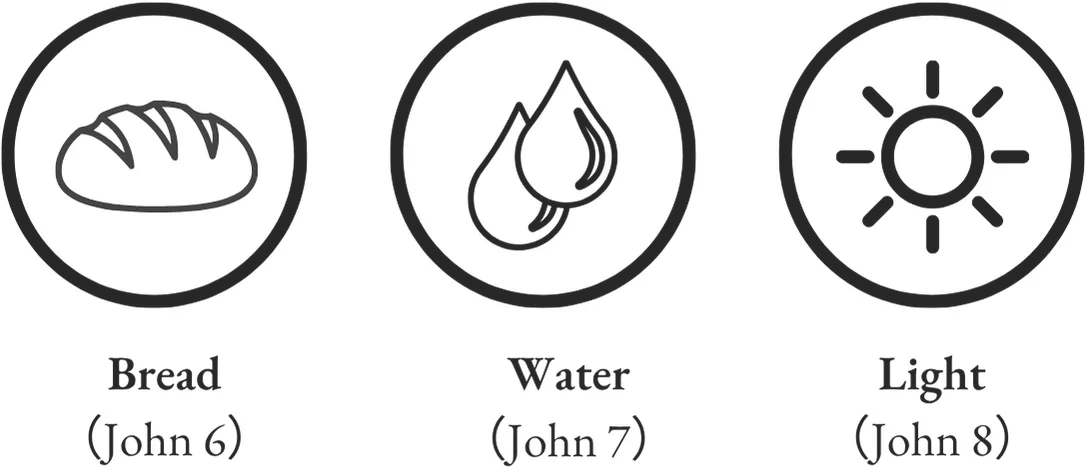
God provided manna to feed His people, water from the rock to sustain them, and a pillar of fire to guide them. Jesus presents Himself as the ultimate fulfilment of these divine provisions. He is the Bread of Life, satisfying spiritual hunger, the source of Living Water, quenching spiritual thirst, and the Light of the World, leading people out of darkness. In Him, God’s provision surpasses anything given through Moses.
Textual Variant
Section titled “Textual Variant”The earliest manuscripts do not include 7:53–8:11.
Section titled “The earliest manuscripts do not include 7:53–8:11.”The footnote to 7:53 says, “Some manuscripts do not include 7:53–8:11; others add the passage here or after 7:36 or after 21:25 or after Luke 21:38, with variations in the text.”
The narrative, though well known, is absent from the earliest Greek manuscripts and early church citations. Later manuscripts place it in different locations. Some appear after John 21:25, and at least one after John 7:36. This suggests it likely began as an oral tradition before being included in the Gospel. While probably not original to the text, the account reflects the character of Jesus Christ and illustrates His mercy and call to repentance. It remains valuable as a testimony to His compassion and the ethical truths of the Gospel message.
This famous story of the woman caught in adultery is missing from the earliest and most reliable Greek manuscripts. It appears later in the tradition, hence its frequent bracketing or inclusion as a footnote in modern Bibles. As Leon Morris puts it, “The story has an authentic ring to it. As we read it we feel, ‘This is what Jesus would have said!’“⁸
The consensus today is that while the story is likely apostolic and historical (it really happened), it was not part of the original Gospel of John. It was likely a “floating” piece of oral tradition that was eventually inserted into the text to preserve it for the Church.
Preaching and Teaching the Word
Section titled “Preaching and Teaching the Word”Sinners Anonymous (8:1–11)
A sermon on the woman caught in adultery could be titled “Sinners Anonymous,” which explores two sins: hypocrisy, often hidden, and adultery, publicly known. The woman is unnamed, though her sin is exposed. Jesus responds with grace, addressing both sins and offering liberation rather than condemnation through repentance and new life.
“I Am the Light of the World” (8:12)
Approach a sermon on “I am the Light of the World” by highlighting how Jesus Christ reveals God’s truth and dispels spiritual darkness. Light signifies guidance, life, and salvation. Walking in His light transforms disciples, leading to truth and purposeful living in a dark world.
Set Free by the Truth (8:32)
Jesus tells the Jews who believed in Him, “If you abide in my word, you are truly my disciples, and you will know the truth, and the truth will set you free” (vv. 31–32). Those who receive His teaching are invited to discover its truth and to know Him as the truth through faith and faithful, persevering obedience.
John 9
Section titled “John 9”During the Feast of Tabernacles, Jesus heals a man born blind, demonstrating both divine power and deep compassion. This sign exposes the Pharisees’ spiritual blindness, highlights the man’s growing faith and obedience, and reveals Jesus as the true Light who opens eyes both physically and spiritually.
Places and People Profile
Section titled “Places and People Profile”Places Profile
Section titled “Places Profile”- Pool of Siloam: Located in the southern part of the Tyropoeon Valley. It was built by King Hezekiah (2 Chr 32:30) and first explored in 1838 by Edward Robinson. Its purpose was to bring water from the spring of Gihon into Jerusalem.
The Sixth Sign: Healing of the Man Born Blind (9:1–41)
Section titled “The Sixth Sign: Healing of the Man Born Blind (9:1–41)”Jesus Heals a Man Born Blind
1 As he passed by, he saw a man blind from birth. 2 And his disciples asked him, “Rabbi, who sinned, this man or his parents, that he was born blind?” 3 Jesus answered, “It was not that this man sinned, or his parents, but that the works of God might be displayed in him. 4 We must work the works of him who sent me while it is day; night is coming, when no one can work. 5 As long as I am in the world, I am the light of the world.” 6 Having said these things, he spit on the ground and made mud with the saliva. Then he anointed the man’s eyes with the mud 7 and said to him, “Go, wash in the pool of Siloam” (which means Sent). So he went and washed and came back seeing.
8 The neighbors and those who had seen him before as a beggar were saying, “Is this not the man who used to sit and beg?” 9 Some said, “It is he.” Others said, “No, but he is like him.” He kept saying, “I am the man.” 10 So they said to him, “Then how were your eyes opened?” 11 He answered, “The man called Jesus made mud and anointed my eyes and said to me, ‘Go to Siloam and wash.’ So I went and washed and received my sight.” 12 They said to him, “Where is he?” He said, “I do not know.”
13 They brought to the Pharisees the man who had formerly been blind. 14 Now it was a Sabbath day when Jesus made the mud and opened his eyes. 15 So the Pharisees again asked him how he had received his sight. And he said to them, “He put mud on my eyes, and I washed, and I see.” 16 Some of the Pharisees said, “This man is not from God, for he does not keep the Sabbath.” But others said, “How can a man who is a sinner do such signs?” And there was a division among them. 17 So they said again to the blind man, “What do you say about him, since he has opened your eyes?” He said, “He is a prophet.”
18 The Jews did not believe that he had been blind and had received his sight, until they called the parents of the man who had received his sight 19 and asked them, “Is this your son, who you say was born blind? How then does he now see?” 20 His parents answered, “We know that this is our son and that he was born blind. 21 But how he now sees we do not know, nor do we know who opened his eyes. Ask him; he is of age. He will speak for himself.” 22 (His parents said these things because they feared the Jews, for the Jews had already agreed that if anyone should confess Jesus to be Christ, he was to be put out of the synagogue. 23 Therefore his parents said, “He is of age; ask him.”)
24 So for the second time they called the man who had been blind and said to him, “Give glory to God. We know that this man is a sinner.” 25 He answered, “Whether he is a sinner I do not know. One thing I do know, that though I was blind, now I see.” 26 They said to him, “What did he do to you? How did he open your eyes?” 27 He answered them, “I have told you already, and you would not listen. Why do you want to hear it again? Do you also want to become his disciples?” 28 And they reviled him, saying, “You are his disciple, but we are disciples of Moses. 29 We know that God has spoken to Moses, but as for this man, we do not know where he comes from.” 30 The man answered, “Why, this is an amazing thing! You do not know where he comes from, and yet he opened my eyes. 31 We know that God does not listen to sinners, but if anyone is a worshiper of God and does his will, God listens to him. 32 Never since the world began has it been heard that anyone opened the eyes of a man born blind. 33 If this man were not from God, he could do nothing.” 34 They answered him, “You were born in utter sin, and would you teach us?” And they cast him out.
35 Jesus heard that they had cast him out, and having found him he said, “Do you believe in the Son of Man?” 36 He answered, “And who is he, sir, that I may believe in him?” 37 Jesus said to him, “You have seen him, and it is he who is speaking to you.” 38 He said, “Lord, I believe,” and he worshiped him. 39 Jesus said, “For judgment I came into this world, that those who do not see may see, and those who see may become blind.” 40 Some of the Pharisees near him heard these things, and said to him, “Are we also blind?” 41 Jesus said to them, “If you were blind, you would have no guilt; but now that you say, ‘We see,’ your guilt remains.”
The transition from John 8 to 9 is seamless. In John 8, Jesus proclaims, “I am the light of the world” (8:12). This theme continues in John 9, where He brings both literal and spiritual light by restoring sight to the man born blind, demonstrating the life-giving power of His presence.
The Sixth Dialogue: Jesus with the Jewish Authorities (vv. 1–41)
Section titled “The Sixth Dialogue: Jesus with the Jewish Authorities (vv. 1–41)”John presents the sixth sign, the healing of the man born blind, as a dialogue that exposes the Jewish authorities’ spiritual blindness and pride. It contrasts their rejection with the transformative power of faith in Jesus Christ, who reveals truth and brings spiritual sight. This sign reveals Jesus as the Light of the World, demonstrates His power to give both physical and spiritual sight, and exposes the spiritual blindness of those who reject Him.
Healing at the Pool of Siloam (vv. 1–37)
Section titled “Healing at the Pool of Siloam (vv. 1–37)”The healing of the man born blind concludes the second phase of Jesus’ ministry in Jerusalem. Like the healing at the Pool of Bethesda, this miracle is associated with a pool and takes place near the Temple. Once again, water appears as a key motif, returning to its role in ritual cleansing after previously representing the satisfaction and abundant life found in Jesus’ gift of living water at the Feast of Tabernacles.
The event unfolds in the aftermath of an intense debate at the Temple. As Jesus leaves the Temple precincts, He encounters a man who had been blind from birth, a condition that rendered him ritually unclean (v. 1). Jesus makes mud with His saliva, places it on the man’s eyes, and instructs him to wash in the Pool of Siloam (vv. 6–7). This pool functioned as a large public mikveh, used by pilgrims for ritual purification before entering the Temple.
The man obeys Jesus’ command. After washing, he receives sight for the first time in his life (v. 7). The washing itself does not heal, but it completes what Jesus has already begun. The man is not only physically restored but is now ritually clean and able to enter the Temple, something he had never been permitted to do before.
The Pool of Siloam
Section titled “The Pool of Siloam”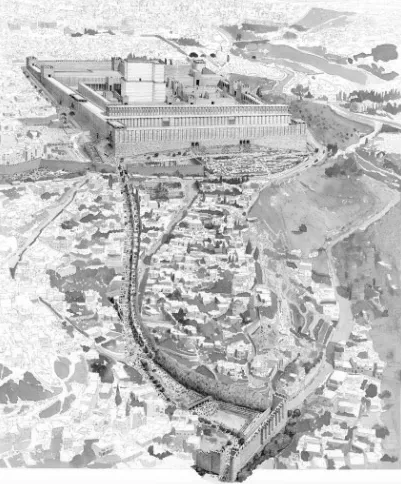
Artist’s impression of the Pool of Siloam
Jesus instructs the man born blind to wash in the Pool of Siloam. Like the Pool of Bethesda, this pool functions as a large, naturally sourced water system and serves as an important mikveh for pilgrims seeking ritual purification. The reference to “living water,” meaning natural, flowing water, remains a key requirement for a mikveh to be ritually valid.
The Progression of the Blind Man’s Recognition of Jesus (vv. 11–38)
Section titled “The Progression of the Blind Man’s Recognition of Jesus (vv. 11–38)”| Step | Recognition |
|---|---|
| 1 | "The man called Jesus" (v. 11) |
| 2 | "He is a prophet" (v. 17) |
| 3 | "[He is] from God" (v. 33) |
| 4 | "Lord, I believe" (v. 38) |
Progression of the Blind Man’s Faith
The blind man undergoes a dramatic progression in his recognition of Jesus, moving from simply knowing His name to worshipping Him as Lord. This journey shows a deepening understanding of Jesus, starting with a physical healing and leading to complete spiritual faith.
Initially, the man knows very little about his healer. When asked by his neighbours, he identifies Him simply as “the man called Jesus” (v. 11) who made mud, applied it to his eyes, and sent him to wash in the Pool of Siloam.
Under interrogation by the Pharisees, the man’s understanding increases. He reflects on the miracle and concludes that Jesus must be a prophet (v. 17), acknowledging a higher power behind the healing.
As the interrogation continues, the man gains more confidence and spiritual insight. Despite the Pharisees’ insults, he argues that “if this man were not from God, he could do nothing” (v. 33), recognising Jesus’ divine source of power.
Later, Jesus finds the healed man and invites him to faith by asking if he believes in the Son of Man (v. 35). The man responds with belief and worship (v. 38), becoming a true disciple. Unlike the healed lame man in John 5, who fails to recognise Jesus, the once blind man moves from darkness to sight, both physically and spiritually.
The Sight of the Blind Versus the Blindness of the Sighted (vv. 39–41)
Section titled “The Sight of the Blind Versus the Blindness of the Sighted (vv. 39–41)”The healing of the blind man sparks controversy with the Pharisees over the nature of sin, healing, and Sabbath observance. The miracle reveals Jesus as the Light of the World, bringing both physical sight and spiritual insight.
The blind man testifies to what happened to him (v. 15), but the Pharisees blindly reject his testimony (vv. 16–18). They reject the truth of who Jesus is. They think they know everything, even God, but what they are missing is true sight. They think they can see, yet they are blind to their own sin (v. 41).
Contrasting the Lame Man and the Man Born Blind
Section titled “Contrasting the Lame Man and the Man Born Blind”Both the healing of the blind man and that of the lame man (5:1–15) occur near the Temple in Jerusalem during a Jewish festival and involve a pool of water as a central feature.
| The Lame Man | The Man Born Blind |
|---|---|
| Lame Man (John 5:1–15) | Man Born Blind (John 9:1–38) |
| Disabled for 38 years | Blind from birth |
| Located at Bethesda, by the pool | Located on the roadside |
| Waiting for healing through water | Healed through Jesus' initiative |
| Jesus heals by command alone | Jesus heals using mud and washing |
| Healing occurs on the Sabbath | Healing occurs on the Sabbath |
| Responds with obedience but passivity | Responds with faith, courage, and testimony |
| Later reports Jesus to the authorities | Confesses Jesus despite opposition |
| Physical healing, spiritual ambiguity | Physical healing leading to spiritual sight |
Textual Variant
Section titled “Textual Variant”“Son of Man” / “Son of God” (v. 35)
Section titled ““Son of Man” / “Son of God” (v. 35)”In John 9:35, there is a textual variant in how the healed man addresses Jesus. Most early manuscripts read “Son of Man,” highlighting Jesus’ humanity and Messianic role, which fits John’s usual self-designation. A few later manuscripts read “Son of God,” emphasising His divinity, and were possibly added by scribes to clarify the man’s recognition of Jesus. Either way, the passage shows the man acknowledging Jesus in a saving way, but the original reading is most likely “Son of Man.”
Preaching and Teaching the Word
Section titled “Preaching and Teaching the Word”Now I See (9:25)
“Come and see,” said Jesus to Andrew and his companion (1:39), Philip to Nathanael (1:46), and the Samaritan woman to her neighbours (4:29). This sequence belongs to the pattern of seeing and believing that is vividly portrayed in the narrative of Jesus giving sight to a beggar who was blind from birth, who testifies in 9:25, “One thing I do know, that though I was blind, now I see.”
From Darkness to Sight (John 9)
Contrast the physical sight given to the beggar with the spiritual blindness of the religious leaders who refuse to see the truth. Challenge the “suffering equals sin” theology of the disciples and explore the “I am the Light of the World” claim. Worship is the natural response to seeing Jesus for who He truly is.
Believing in Jesus (9:38)
John presents the man born blind (John 9) and the woman of Samaria (John 4) as positive models of growing belief. The blind beggar’s faith develops from “the man called Jesus” (v. 11) to “a prophet” (v. 17), to one sent from God (vv. 30–33), and finally to “Lord, I believe” (v. 38). This progression offers a helpful entry point for preaching John’s central theme. From there, hearers can reflect on what it means to believe in Jesus in concrete, everyday life.
John 10
Section titled “John 10”The narrative in John 10 transitions from the Feast of Tabernacles to the Feast of Dedication. Jesus emphasises His identity as the Good Shepherd, who lays down His life for His sheep. Later, at the Feast of Dedication, He boldly affirms His divine authority and declares His oneness with the Father.
Places and People Profile
Section titled “Places and People Profile”Places Profile
Section titled “Places Profile”- Solomon’s Colonnade: A porch on the east side of the Temple that served as an antechamber to the Holy Place. It was dedicated by Solomon, along with the rest of the Temple, around 950 BC. It was later rebuilt by Herod, with work beginning around 20 BC and not completed until AD 64. Solomon’s Colonnade is mentioned in the New Testament in John 10:23; Acts 3:11; 5:12.
- Jordan River: The only large stream in Israel. The name “Jordan” means “running down.” Descending from four Syrian tributaries, the Jordan River flows about ten miles to the Sea of Galilee. First mentioned in Num 35, the Jordan River makes numerous appearances throughout the Bible.
The Good Shepherd Discourse (10:1–42)
Section titled “The Good Shepherd Discourse (10:1–42)”I Am the Good Shepherd
1 “Truly, truly, I say to you, he who does not enter the sheepfold by the door but climbs in by another way, that man is a thief and a robber. 2 But he who enters by the door is the shepherd of the sheep. 3 To him the gatekeeper opens. The sheep hear his voice, and he calls his own sheep by name and leads them out. 4 When he has brought out all his own, he goes before them, and the sheep follow him, for they know his voice. 5 A stranger they will not follow, but they will flee from him, for they do not know the voice of strangers.” 6 This figure of speech Jesus used with them, but they did not understand what he was saying to them.
7 So Jesus again said to them, “Truly, truly, I say to you, I am the door of the sheep. 8 All who came before me are thieves and robbers, but the sheep did not listen to them. 9 I am the door. If anyone enters by me, he will be saved and will go in and out and find pasture. 10 The thief comes only to steal and kill and destroy. I came that they may have life and have it abundantly. 11 I am the good shepherd. The good shepherd lays down his life for the sheep. 12 He who is a hired hand and not a shepherd, who does not own the sheep, sees the wolf coming and leaves the sheep and flees, and the wolf snatches them and scatters them. 13 He flees because he is a hired hand and cares nothing for the sheep. 14 I am the good shepherd. I know my own and my own know me, 15 just as the Father knows me and I know the Father; and I lay down my life for the sheep. 16 And I have other sheep that are not of this fold. I must bring them also, and they will listen to my voice. So there will be one flock, one shepherd. 17 For this reason the Father loves me, because I lay down my life that I may take it up again. 18 No one takes it from me, but I lay it down of my own accord. I have authority to lay it down, and I have authority to take it up again. This charge I have received from my Father.”
19 There was again a division among the Jews because of these words. 20 Many of them said, “He has a demon, and is insane; why listen to him?” 21 Others said, “These are not the words of one who is oppressed by a demon. Can a demon open the eyes of the blind?”
The Second Monologue of Jesus: The Shepherd and the Sheep (vv. 1–21)
Section titled “The Second Monologue of Jesus: The Shepherd and the Sheep (vv. 1–21)”In His monologue, Jesus presents Himself as the Good Shepherd, drawing on Israel’s imagery of God as shepherd and contrasting Himself with false leaders (vv. 1, 8–10). He emphasises relationship and trust. The true shepherd enters by the door, is recognised by the gatekeeper, and calls His sheep, who follow Him because they know His voice (vv. 2–5).
The Third “I Am” Saying: “I am the Door” (v. 9)
Section titled “The Third “I Am” Saying: “I am the Door” (v. 9)”In the third “I Am” saying, Jesus declares, “I am the door” (v. 9). He presents Himself as the only entrance to salvation and security. Those who enter through Him find safety, spiritual nourishment, and freedom. The image highlights both exclusivity and care, as Christ protects His flock and leads them into abundant life.
The Fourth “I Am” Saying: “I am the Good Shepherd” (v. 11)
Section titled “The Fourth “I Am” Saying: “I am the Good Shepherd” (v. 11)”Jesus’ fourth “I Am” saying, “I am the good shepherd,” reveals His loving care and protective guidance for His people, demonstrating His authority to lay down His life for the sheep of the new covenant.
As the Good Shepherd, Jesus offers salvation, protection, and abundant life (vv. 7, 9–10), while the thief comes only to steal, kill, and destroy (v. 10). Unlike hired hands who abandon the flock, the Good Shepherd lays down His life for the sheep (vv. 11–13, 15, 17–18), revealing the depth of His sacrificial love and foreshadowing the cross. His knowledge of the sheep reflects His intimate relationship with the Father (vv. 14–15), and His reference to “other sheep” points to the inclusion of Gentiles into one flock under one shepherd (v. 16).
The two images are complementary. As the door, Jesus is the only way into salvation. As the Good Shepherd, He lovingly leads, knows, and protects His sheep, even laying down His life. He is both the entrance into life and the guardian who sustains it.
The passage concludes with division among the people. Some accuse Him of being demon-possessed, while others recognise that His works and words come from God (vv. 19–21).
I and the Father Are One
22 At that time the Feast of Dedication took place at Jerusalem. It was winter, 23 and Jesus was walking in the temple, in the colonnade of Solomon. 24 So the Jews gathered around him and said to him, “How long will you keep us in suspense? If you are the Christ, tell us plainly.” 25 Jesus answered them, “I told you, and you do not believe. The works that I do in my Father’s name bear witness about me, 26 but you do not believe because you are not among my sheep. 27 My sheep hear my voice, and I know them, and they follow me. 28 I give them eternal life, and they will never perish, and no one will snatch them out of my hand. 29 My Father, who has given them to me, is greater than all, and no one is able to snatch them out of the Father’s hand. 30 I and the Father are one.”
31 The Jews picked up stones again to stone him. 32 Jesus answered them, “I have shown you many good works from the Father; for which of them are you going to stone me?” 33 The Jews answered him, “It is not for a good work that we are going to stone you but for blasphemy, because you, being a man, make yourself God.” 34 Jesus answered them, “Is it not written in your Law, ‘I said, you are gods’? 35 If he called them gods to whom the word of God came—and Scripture cannot be broken— 36 do you say of him whom the Father consecrated and sent into the world, ‘You are blaspheming,’ because I said, ‘I am the Son of God’? 37 If I am not doing the works of my Father, then do not believe me; 38 but if I do them, even though you do not believe me, believe the works, that you may know and understand that the Father is in me and I am in the Father.” 39 Again they sought to arrest him, but he escaped from their hands. 40 He went away again across the Jordan to the place where John had been baptizing at first, and there he remained. 41 And many came to him. And they said, “John did no sign, but everything that John said about this man was true.” 42 And many believed in him there.
The Seventh Dialogue: Jesus with the Jewish Crowd (vv. 22–42)
Section titled “The Seventh Dialogue: Jesus with the Jewish Crowd (vv. 22–42)”The dialogue between Jesus and the Jewish crowd during the Feast of Dedication emphasises His unity with the Father, His authority as the Good Shepherd, and the call to believe in Him for eternal life, despite opposition and misunderstanding.
The Father and I Are One (vv. 22–42)
Section titled “The Father and I Are One (vv. 22–42)”During the Feast of Dedication in Jerusalem, Jesus affirms His identity and authority in a dialogue with the Jewish leaders, declaring, “I and the Father are one” (v. 30). This statement evokes divine unity, linking Him directly to God and fulfilling the Johannine theme of Jesus as the incarnate Word.
The leaders accuse Him of blasphemy for asserting equality with God (v. 33). Jesus, however, defends Himself, explaining that His words and works testify to the Father’s authority (vv. 25–27). He emphasises that His miraculous acts, including healing, feeding, and caring for the sheep, demonstrate the divine origin and purpose of His mission (vv. 37–38).
He emphasises that His sheep hear His voice, follow Him, and share eternal life, illustrating the relational and covenantal nature of His authority.
Attempting to stone Him, His opponents again reveal spiritual blindness, while Jesus retreats safely across the Jordan, continuing His ministry among those who recognise Him.
The closing geographical note (v. 41) points back to the role of John the Baptist as the first witness at the beginning of Jesus’ public ministry, which is now drawing to a close. The crowds who had come to John the Baptist now come to Jesus and remember what John had said about Him. Their remark about signs (v. 41) concerns those that Jesus has performed thus far (John 2–9) and anticipates the climactic sign reported in John 11. John notes that “many believed in him there” (v. 42), offering an encouraging conclusion regarding the impact of Jesus’ public ministry through His six signs up to this point.
Preaching and Teaching the Word
Section titled “Preaching and Teaching the Word”“I Am the Door of the Sheep” (10:7, 9)
Approach a sermon on “I am the door of the sheep” (John 10:7, 9) by showing how Jesus Christ is the only entrance to salvation and security. Through Him, believers find protection, provision, and freedom. The image invites hearers to enter by faith and experience the safety and abundant life He promises.
“I Am the Good Shepherd” (10:11, 14)
Approach the sermon by presenting Jesus Christ as the Good Shepherd who knows His sheep, calls them by name, and lays down His life for them. Contrast His sacrificial care with false shepherds. Emphasise personal relationship, protection, and guidance, inviting believers to trust His voice and follow Him faithfully.
Hearing and Discerning the Shepherd’s Voice (10:3–5, 27)
Approach the sermon by focusing on hearing and discerning the voice of Jesus Christ, the Good Shepherd. His voice brings abundant life, offering spiritual fulfilment and guidance, in contrast to false voices that lead astray. True discipleship requires attentive listening and obedience, allowing believers to experience the fullness of life in Him.
The Gift of Abundant Life (10:10)
Approach the sermon on v. 10 by contrasting the thief, who comes to steal, kill, and destroy, with the abundant life offered by Jesus Christ. This zoe life is rich in spiritual fulfilment, joy, and fellowship with God. Emphasise that abundance is not material wealth but a transformed life beginning now and lasting eternally.