Part 2 02 — From Cana to Cana
From Cana to Cana: The Cana Cycle
Section titled “From Cana to Cana: The Cana Cycle”(2:1–4:54)
John structures Jesus’ early public ministry in two connected sequences: the Cana Cycle (John 2–4) and the Jerusalem Cycle (John 5–12).
The Cana Cycle begins with the wedding at Cana, where Jesus performs His first sign, turning water into wine. He then goes to Jerusalem, cleanses the Temple, and faces questions about His authority. Next comes a private conversation with Nicodemus at night, where Jesus teaches the necessity of being born again. The narrative moves to Judea and Samaria, where at Jacob’s well, He speaks with a Samaritan woman, leading many in her town to believe.
The cycle concludes back in Cana, where Jesus heals the son of an official from a distance, restoring the boy’s life through His word.
John 2
Section titled “John 2”The first public signs of Jesus’ ministry include His miraculous turning of water into wine at Cana in Galilee and His cleansing of the Temple in Jerusalem. In both acts, He revealed His divine glory and inspired His disciples to place their trust in Him.
Places and People Profile
Section titled “Places and People Profile”Place Profile
Section titled “Place Profile”- Cana: Mentioned four times in the Gospel of John (2:1, 11; 4:46; 21:2) and nowhere else in Scripture. At Cana, Jesus performed His first miracle, turning water into wine, and announced the healing of the nobleman’s son.
- Capernaum: Served as the centre of Jesus’ ministry in Galilee. It was the site of numerous miracles, the home of Matthew, and the setting for the Bread of Life discourse, as well as many other teachings.
People Profile
Section titled “People Profile”- Mary: The mother of Jesus is referred to twice in this Gospel (2:1; 19:25), but not by name. She was a descendant of David from the tribe of Judah. Not to be confused with at least five other Marys mentioned in the New Testament.
The First Sign: Turning Water into Wine at the Wedding at Cana (2:1–12)
Section titled “The First Sign: Turning Water into Wine at the Wedding at Cana (2:1–12)”The Wedding at Cana
1 On the third day there was a wedding at Cana in Galilee, and the mother of Jesus was there. 2 Jesus also was invited to the wedding with his disciples. 3 When the wine ran out, the mother of Jesus said to him, “They have no wine.” 4 And Jesus said to her, “Woman, what does this have to do with me? My hour has not yet come.” 5 His mother said to the servants, “Do whatever he tells you.”
6 Now there were six stone water jars there for the Jewish rites of purification, each holding twenty or thirty gallons. 7 Jesus said to the servants, “Fill the jars with water.” And they filled them up to the brim. 8 And he said to them, “Now draw some out and take it to the master of the feast.” So they took it. 9 When the master of the feast tasted the water now become wine, and did not know where it came from (though the servants who had drawn the water knew), the master of the feast called the bridegroom 10 and said to him, “Everyone serves the good wine first, and when people have drunk freely, then the poor wine. But you have kept the good wine until now.” 11 This, the first of his signs, Jesus did at Cana in Galilee, and manifested his glory. And his disciples believed in him.
12 After this he went down to Capernaum, with his mother and his brothers and his disciples, and they stayed there for a few days.
On the Third Day (v. 1)
Section titled “On the Third Day (v. 1)”There is a noticeable change of setting at the start of the chapter, moving from Bethany to Cana. This signals the beginning of a new narrative section. It opens with the words “On the third day” (v. 1), which function as a temporal indicator. The phrase “on the third day” also carries significant theological associations. In 1 Cor 15:4, we read that Jesus Christ was raised on the third day. The phrase carries symbolic meaning that points to the resurrection in addition to indicating chronology.
This miracle signifies the start of Jesus’ public ministry. The words of Mary, “They have no wine” (v. 3), reflect both social embarrassment and the limitations of the prevailing religious system. Verse 4 introduces Jesus’ reference to his “hour,” linking his ministry to the ultimate mission He will fulfil through His death, resurrection, and glorification.
Water into Wine (vv. 3–12)
Section titled “Water into Wine (vv. 3–12)”This first sign of Jesus involves six large stone water jars described as being used for the Jewish rites of purification (v. 6). These jars, which likely contained water for ceremonial washing before meals or Temple practices, were filled with water that Jesus transformed into wine. The symbolism suggests that Jesus was replacing the system of repeated ritual cleansing with the abundance and renewal associated with the messianic age.
Jesus changes the water into “good wine” (v. 10), illustrating the messianic age’s abundance and the new reality of God’s kingdom. The act symbolises the replacement of the old order with the new.
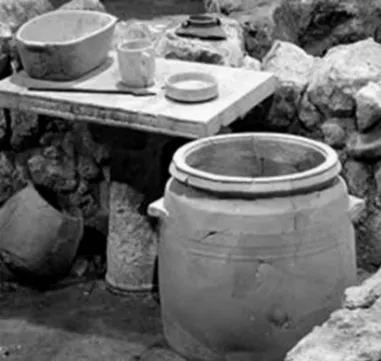
A large water jar discovered in Israel that corresponds to the dimensions described by John.
In this narrative Jesus performed a sign with the result that He “manifested his glory. And his disciples believed in him” (v. 11).
This first “sign” sets the stage for the rest of the narrative to show that Jesus is indeed “the Son of God, and that through believing you may have life in his name” (20:31).
The Clearing of the Temple (2:13–25)
Section titled “The Clearing of the Temple (2:13–25)”Jesus Cleanses the Temple
13 The Passover of the Jews was at hand, and Jesus went up to Jerusalem. 14 In the temple he found those who were selling oxen and sheep and pigeons, and the money-changers sitting there. 15 And making a whip of cords, he drove them all out of the temple, with the sheep and oxen. And he poured out the coins of the money-changers and overturned their tables. 16 And he told those who sold the pigeons, “Take these things away; do not make my Father’s house a house of trade.” 17 His disciples remembered that it was written, “Zeal for your house will consume me.”
18 So the Jews said to him, “What sign do you show us for doing these things?” 19 Jesus answered them, “Destroy this temple, and in three days I will raise it up.” 20 The Jews then said, “It has taken forty-six years to build this temple, and will you raise it up in three days?” 21 But he was speaking about the temple of his body. 22 When therefore he was raised from the dead, his disciples remembered that he had said this, and they believed the Scripture and the word that Jesus had spoken.
The Passover is Near (v. 13)
Section titled “The Passover is Near (v. 13)”This is the first of three Passovers mentioned in the Gospel. John refers to the Passover three times in his Gospel: here in 2:13, at 6:4 (“The Jewish Passover feast was near”), and in 12:1 (“Six days before the Passover”). These references serve as narrative markers. The first appears at the beginning of the Book of Signs, the second at its midpoint, and the third near the conclusion, guiding the unfolding of the Gospel’s plot.
Cleansing the Temple (vv. 14–17)
Section titled “Cleansing the Temple (vv. 14–17)”As Passover drew near, Jesus entered Jerusalem and saw the Temple courts crowded with money changers and merchants (v. 13). He drove them out, overturned their tables, and proclaimed, “Take these things away; do not make my Father’s house a house of trade” (v. 16). His actions were not merely a reaction to commerce, but a bold confrontation of the corruption that had distorted genuine worship.
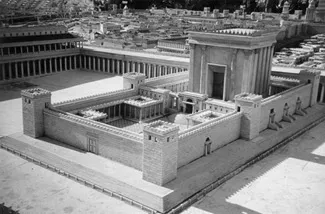
Model of Jerusalem Temple. According to the Jewish historian Josephus, Herod the Great began extensive remodelling of the Temple in 20–19 BC.
The Temple, intended as a place of communion with God, had been turned into a marketplace.
Significance of the Cleansing (vv. 18–22)
Section titled “Significance of the Cleansing (vv. 18–22)”The Jewish leaders challenge Jesus to show a sign of His authority in cleansing the Temple. In vv. 19–21, Jesus’ response links this act to His impending death and resurrection. He spoke of the destruction of the temple, which would ultimately cost Him His life, but through His resurrection, He fulfilled His words, and the people came to believe in Him (v. 22).
Jesus’ Temple Cleansing: Once or Twice?
Section titled “Jesus’ Temple Cleansing: Once or Twice?”Some scholars argue that Jesus may have cleansed the Temple twice, once early in his ministry (in John 2:13–22) to reveal his glory and inaugurate his mission, and again near the end (in Matt 21:12–13; Mark 11:15–17; Luke 19:45–46) to confront corrupt Temple practices before the Passion.
His multiple trips to Jerusalem make this historically plausible, and the differences in detail and emphasis between John’s Gospel and the Synoptics suggest the Gospels may describe two distinct events, each serving a unique theological purpose.
Supporters of the view that the Temple cleansing occurred twice include William Hendriksen, Leon Morris, John R. W. Stott, Craig Keener, G. K. Beale, and Andreas J. Köstenberger. Historical proponents of this perspective also include Augustine of Hippo and Thomas Aquinas.
Jesus Knows What Is in Man
23 Now when he was in Jerusalem at the Passover Feast, many believed in his name when they saw the signs that he was doing. 24 But Jesus on his part did not entrust himself to them, because he knew all people 25 and needed no one to bear witness about man, for he himself knew what was in man.
Believing Because of Signs (vv. 23–25)
Section titled “Believing Because of Signs (vv. 23–25)”During the Passover in Jerusalem, many believed in Jesus when they saw the signs He performed. Their faith, however, was shallow, resting on what they observed rather than true transformation. Jesus did not yield Himself to them, for He knew what was in man. This divine insight reveals that the real issue is not lack of evidence, but the state of the heart. Signs may awaken interest, but only God’s renewing work produces lasting faith.
Preaching and Teaching the Word
Section titled “Preaching and Teaching the Word”At a Wedding (2:1–12)
Jesus’ first public act took place at a wedding. He joined in the celebration, bringing joy to the occasion. Through this act, He revealed the glory of the eternal Word, the Creator who made humanity male and female and declared this design good.
Glory in the Ordinary (2:1–12)
This sign demonstrates that Jesus cares for everyday moments, not only for crises. He meets needs, transforms situations, and works through ordinary routines and relationships. His glory is revealed in the commonplace, showing that God is present in the ordinary details of life.
Zeal for True Worship (2:13–22)
During Passover, Jesus cleansed the Temple, showing that God’s house is for prayer, not commerce. His actions reveal divine zeal for true worship and expose the human tendency to prioritise profit or ritual over devotion. He calls believers to remove distractions that weaken worship and to live in authentic obedience.
John 3
Section titled “John 3”Chapter 3 is divided into two sections. The first presents Jesus’ conversation with Nicodemus, where He explains spiritual rebirth and the path to eternal life. The second emphasises John the Baptist’s testimony, highlighting his role in directing others to Jesus and revealing the greater scope of Jesus’ mission.
Places and People Profile
Section titled “Places and People Profile”Place Profile
Section titled “Place Profile”- Aenon: The word in Aramaic means “springs.” It was possibly located in the hills southeast of Mount Gerizim, near the northern border of Judea.
People Profile
Section titled “People Profile”- Nicodemus: A Pharisee and member of the seventy-elder Sanhedrin, which ruled the Jewish people. He defended Jesus in the Sanhedrin (7:50–52) and assisted Joseph of Arimathea with Jesus’ burial. His name means “victor over the people.” He is not mentioned again in the New Testament after John 19.
- Pharisees: A Jewish sect that relied on oral law and tradition in their teaching. They were a minority party in the Sanhedrin and were theologically conservative compared with the Sadducees. Major opponents of Jesus’ teaching. There were about six thousand during the time of Jesus, mostly middle-class businessmen, merchants, and tradesmen.
Jesus and Nicodemus (3:1–21)
Section titled “Jesus and Nicodemus (3:1–21)”You Must Be Born Again
1 Now there was a man of the Pharisees named Nicodemus, a ruler of the Jews. 2 This man came to Jesus by night and said to him, “Rabbi, we know that you are a teacher come from God, for no one can do these signs that you do unless God is with him.” 3 Jesus answered him, “Truly, truly, I say to you, unless one is born again he cannot see the kingdom of God.” 4 Nicodemus said to him, “How can a man be born when he is old? Can he enter a second time into his mother’s womb and be born?”
5 Jesus answered, “Truly, truly, I say to you, unless one is born of water and the Spirit, he cannot enter the kingdom of God. 6 That which is born of the flesh is flesh, and that which is born of the Spirit is spirit. 7 Do not marvel that I said to you, ‘You must be born again.’ 8 The wind blows where it wishes, and you hear its sound, but you do not know where it comes from or where it goes. So it is with everyone who is born of the Spirit.”
9 Nicodemus said to him, “How can these things be?” 10 Jesus answered him, “Are you the teacher of Israel and yet you do not understand these things? 11 Truly, truly, I say to you, we speak of what we know, and bear witness to what we have seen, but you do not receive our testimony. 12 If I have told you earthly things and you do not believe, how can you believe if I tell you heavenly things? 13 No one has ascended into heaven except he who descended from heaven, the Son of Man. 14 And as Moses lifted up the serpent in the wilderness, so must the Son of Man be lifted up, 15 that whoever believes in him may have eternal life.
The First Dialogue: Jesus with Nicodemus (3:1–21)
Section titled “The First Dialogue: Jesus with Nicodemus (3:1–21)”This narrative is written as a dialogue, the first of seven major dialogues in John’s Gospel. John records the conversation between Jesus and Nicodemus, which unfolds through questions and explanations, leading from confusion about physical birth to the spiritual truth that one must be born again to enter God’s kingdom.
The passage opens with a dialogue between Jesus and Nicodemus (vv. 1–12), but as the conversation progresses, it shifts into a monologue (vv. 13–21), with Jesus speaking as Nicodemus gradually fades from the scene.
The dialogue unfolds during the Passover in Jerusalem, when Nicodemus, a Pharisee, comes to Jesus by night. The conversation develops in three exchanges, each beginning with a comment from Nicodemus and followed by Jesus’ response. Through this encounter, Jesus makes clear that entry into the kingdom of God is not achieved by human merit, religious standing, or effort, but by being born again through the Spirit.
Jesus’ encounter with Nicodemus speaks especially to those who come “by night” (v. 2). Though Nicodemus acknowledges that Jesus’ signs come from God, Jesus directs him to a greater reality, the necessity of being born again (v. 3). The Greek term anōthen carries a double meaning, “again” and “from above,” which Nicodemus misunderstands as physical rebirth.
Born of Water and Spirit (v. 5)
Section titled “Born of Water and Spirit (v. 5)”Jesus clarifies that He is referring to spiritual rebirth, describing it as being “born of water and Spirit” (v. 5). Water symbolises cleansing, as seen in Jewish purification rites and John’s baptism, while the Spirit signifies God’s life-giving power. Together, they indicate a total transformation.
Many scholars interpret this as a single spiritual birth, emphasising that true renewal comes not from human effort but from God. The repeated mention of the Spirit underscores His essential part in bringing about lasting renewal. A striking detail in v. 7 is that the word “you” in “You must be born again” is plural in the Greek, not singular. With this subtle shift, Jesus’ words extend beyond Nicodemus to a wider audience. What seemed like a private exchange now becomes a direct challenge to every reader. The statement cannot be treated as merely historical dialogue, for the plural “you” draws each person into the conversation and demands a personal response.
For God So Loved the World
16 “For God so loved the world, that he gave his only Son, that whoever believes in him should not perish but have eternal life. 17 For God did not send his Son into the world to condemn the world, but in order that the world might be saved through him. 18 Whoever believes in him is not condemned, but whoever does not believe is condemned already, because he has not believed in the name of the only Son of God.
19 And this is the judgment: the light has come into the world, and people loved the darkness rather than the light because their works were evil. 20 For everyone who does wicked things hates the light and does not come to the light, lest his works should be exposed. 21 But whoever does what is true comes to the light, so that it may be clearly seen that his works have been carried out in God.“
John 3:16
Section titled “John 3:16”This verse is the heart of the Gospel. God’s love gave His only Son so that anyone who believes can receive eternal life. “John 3:16” is often known as the Gospel in a Nutshell. This 26-word verse (in the original Greek text) expresses the core themes of God’s love in John’s Gospel, the gift of His Son, and the promise of eternal life for believers.
Light and Darkness (3:16–21)
Section titled “Light and Darkness (3:16–21)”God’s love gave His Son, so all who believe in Jesus have eternal life (v. 16). Faith is trusting Him, not mere knowledge. Jesus came to save, not condemn (v. 17). In vv. 19–21, “darkness” appears once and “light” five times, emphasising the contrast. Those who embrace truth walk in light, while those who reject it remain in darkness.
The Continuing Testimony of John the Baptist (3:22–36)
Section titled “The Continuing Testimony of John the Baptist (3:22–36)”John the Baptist Exalts Christ
22 After this Jesus and his disciples went into the Judean countryside, and he remained there with them and was baptizing. 23 John also was baptizing at Aenon near Salim, because water was plentiful there, and people were coming and being baptized 24 (for John had not yet been put in prison).
25 Now a discussion arose between some of John’s disciples and a Jew over purification. 26 And they came to John and said to him, “Rabbi, he who was with you across the Jordan, to whom you bore witness—look, he is baptizing, and all are going to him.” 27 John answered, “A person cannot receive even one thing unless it is given him from heaven. 28 You yourselves bear me witness, that I said, ‘I am not the Christ, but I have been sent before him.’ 29 The one who has the bride is the bridegroom. The friend of the bridegroom, who stands and hears him, rejoices greatly at the bridegroom’s voice. Therefore this joy of mine is now complete. 30 He must increase, but I must decrease.”
31 He who comes from above is above all. He who is of the earth belongs to the earth and speaks in an earthly way. He who comes from heaven is above all. 32 He bears witness to what he has seen and heard, yet no one receives his testimony. 33 Whoever receives his testimony sets his seal to this, that God is true. 34 For he whom God has sent utters the words of God, for he gives the Spirit without measure. 35 The Father loves the Son and has given all things into his hand. 36 Whoever believes in the Son has eternal life; whoever does not obey the Son shall not see life, but the wrath of God remains on him.
Pointing People to Christ
Section titled “Pointing People to Christ”John the Baptist points people to Jesus, rejoicing that Christ must increase while he decreases (v. 30). Though he baptizes, his delight lies in directing others to the Son, through whom eternal life and salvation are given (vv. 16–17). True discipleship reflects humility and faithful witness. The Father has entrusted all authority to the Son (v. 35). Belief in Him brings life, while rejection results in judgment. He models a servant’s heart, rejoicing in God’s work and guiding others to Christ.
Preaching and Teaching the Word
Section titled “Preaching and Teaching the Word”Preaching on John 3:16
John 3:16 should be preached not as a slogan but as a revelation of God’s heart, showing His love for the fallen, undeserving world. His love is made real in the giving of His only Son, Jesus Christ. It calls for a personal response, for “whoever believes” invites all, yet requires true trust, a lesson even Nicodemus had to learn. Present the clear choice between perishing and eternal life with God, which begins now and lasts forever.
It contains nine profound truths:
- “For God” — The greatest Person
- “So loved the world” — The greatest truth
- “That he gave” — The greatest act
- “His only Son” — The greatest gift
- “That whoever” — The greatest number
- “Believes in him” — The greatest invitation
- “Should not perish” — The greatest promise
- “But have” — The greatest certainty
- “Eternal life” — The greatest destiny
A Night with the Saviour (3:1–15)
The encounter with Nicodemus shows that coming to Jesus “by night” may signify more than secret sin. It can reveal a spiritual longing in devout individuals who recognise their inner darkness and yearn for God’s presence. Like Nicodemus, some believers struggle with doubt and fear of public confession. Even among members of a congregation, some believers may question whether Jesus truly is as the Gospel presents Him. The narrative invites honest seeking and faith that moves from private curiosity to public commitment.
He Must Increase, but I Must Decrease (3:30)
These words of John the Baptist teach us the essence of spiritual humility. Jesus’ presence and influence must grow in our lives, while our pride, self-interest, and desire for recognition must shrink. This means surrendering control, letting Christ lead in our decisions, relationships, and ministry, and celebrating His work rather than our own. When we decrease, Christ increases, drawing others to Him and filling our lives with true joy, purpose, and peace.
John 4
Section titled “John 4”Chapter 4 recounts two notable events from Jesus’ early ministry. First is His conversation with the Samaritan woman at the well, where He introduces living water and the true worship of God. Second is the healing of the official’s son, referred to as the “second sign,” performed in Cana of Galilee.
Places and People Profile
Section titled “Places and People Profile”Place Profile
Section titled “Place Profile”- Samaria: Capital city of the Northern Kingdom of Israel (1 Kgs 16:24). The Samaritans constructed their temple on Mount Gerizim in the fourth century BC.
- Sychar: Situated on the main road from Jerusalem to Galilee. Jacob’s well lies approximately half a mile south of the village.
- Capernaum: Located on the northwest side of the Sea of Galilee. It was one of the best fishing sites on the lake because of the springs that flow into it. The synagogue at Capernaum contained the Seat of Moses, which Jesus used to proclaim His message (Matt 23:2).
Jesus and the Samaritan Woman (4:1–45)
Section titled “Jesus and the Samaritan Woman (4:1–45)”Jesus and the Woman of Samaria
1 Now when Jesus learned that the Pharisees had heard that Jesus was making and baptizing more disciples than John 2 (although Jesus himself did not baptize, but only his disciples), 3 he left Judea and departed again for Galilee. 4 And he had to pass through Samaria. 5 So he came to a town of Samaria called Sychar, near the field that Jacob had given to his son Joseph. 6 Jacob’s well was there; so Jesus, wearied as he was from his journey, was sitting beside the well. It was about the sixth hour.
7 A woman from Samaria came to draw water. Jesus said to her, “Give me a drink.” 8 (For his disciples had gone away into the city to buy food.) 9 The Samaritan woman said to him, “How is it that you, a Jew, ask for a drink from me, a woman of Samaria?” (For Jews have no dealings with Samaritans.) 10 Jesus answered her, “If you knew the gift of God, and who it is that is saying to you, ‘Give me a drink,’ you would have asked him, and he would have given you living water.”
11 The woman said to him, “Sir, you have nothing to draw water with, and the well is deep. Where do you get that living water? 12 Are you greater than our father Jacob? He gave us the well and drank from it himself, as did his sons and his livestock.” 13 Jesus said to her, “Everyone who drinks of this water will be thirsty again, 14 but whoever drinks of the water that I will give him will never be thirsty again. The water that I will give him will become in him a spring of water welling up to eternal life.” 15 The woman said to him, “Sir, give me this water, so that I will not be thirsty or have to come here to draw water.”
16 Jesus said to her, “Go, call your husband, and come here.” 17 The woman answered him, “I have no husband.” Jesus said to her, “You are right in saying, ‘I have no husband’; 18 for you have had five husbands, and the one you now have is not your husband. What you have said is true.” 19 The woman said to him, “Sir, I perceive that you are a prophet. 20 Our fathers worshiped on this mountain, but you say that in Jerusalem is the place where people ought to worship.” 21 Jesus said to her, “Woman, believe me, the hour is coming when neither on this mountain nor in Jerusalem will you worship the Father. 22 You worship what you do not know; we worship what we know, for salvation is from the Jews. 23 But the hour is coming, and is now here, when the true worshipers will worship the Father in spirit and truth, for the Father is seeking such people to worship him. 24 God is spirit, and those who worship him must worship in spirit and truth.” 25 The woman said to him, “I know that Messiah is coming (he who is called Christ). When he comes, he will tell us all things.” 26 Jesus said to her, “I who speak to you am he.”
27 Just then his disciples came back. They marveled that he was talking with a woman, but no one said, “What do you seek?” or, “Why are you talking with her?” 28 So the woman left her water jar and went away into town and said to the people, 29 “Come, see a man who told me all that I ever did. Can this be the Christ?” 30 They went out of the town and were coming to him.
31 Meanwhile the disciples were urging him, saying, “Rabbi, eat.” 32 But he said to them, “I have food to eat that you do not know about.” 33 So the disciples said to one another, “Has anyone brought him something to eat?” 34 Jesus said to them, “My food is to do the will of him who sent me and to accomplish his work. 35 Do you not say, ‘There are yet four months, then comes the harvest’? Look, I tell you, lift up your eyes, and see that the fields are white for harvest. 36 Already the one who reaps is receiving wages and gathering fruit for eternal life, so that sower and reaper may rejoice together. 37 For here the saying holds true, ‘One sows and another reaps.’ 38 I sent you to reap that for which you did not labor. Others have labored, and you have entered into their labor.”
39 Many Samaritans from that town believed in him because of the woman’s testimony, “He told me all that I ever did.” 40 So when the Samaritans came to him, they asked him to stay with them, and he stayed there two days. 41 And many more believed because of his word. 42 They said to the woman, “It is no longer because of what you said that we believe, for we have heard for ourselves, and we know that this is indeed the Savior of the world.”
43 After the two days he departed for Galilee. 44 (For Jesus himself had testified that a prophet has no honor in his own hometown.) 45 So when he came to Galilee, the Galileans welcomed him, having seen all that he had done in Jerusalem at the feast. For they too had gone to the feast.
This is Jesus’ longest recorded conversation in the New Testament, longer than any with His twelve disciples. While most women came to the well in groups, the Samaritan woman came alone, at the hottest hour of the day, highlighting her isolation. Her life, marked by five previous husbands and a present companion, reflects deep spiritual and relational emptiness. Jesus meets her where she is, showing that no past or present condition can separate us from God’s invitation.
The Second Dialogue: Jesus and the Samaritan Woman (4:1–42)
Section titled “The Second Dialogue: Jesus and the Samaritan Woman (4:1–42)”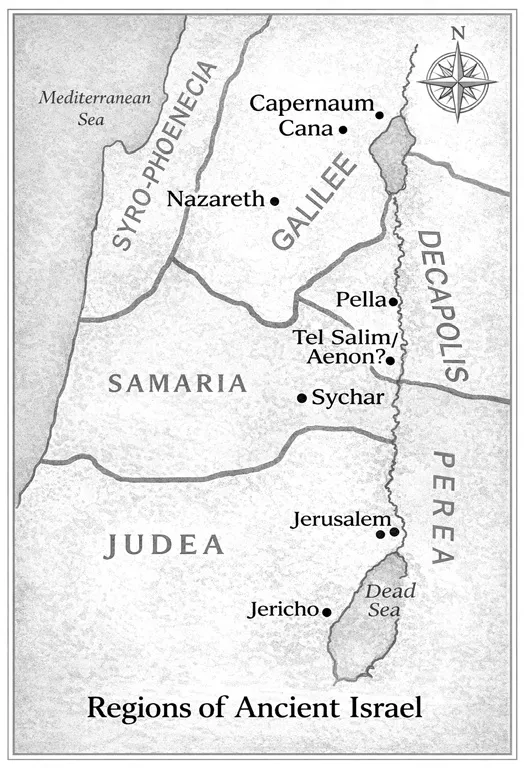
The narrative unfolds as a dialogue between Jesus and the Samaritan woman, where questions and responses gradually reveal deeper truths about living water, true worship, and Jesus’ identity as the Messiah.
Passing Through Samaria (v. 4)
Section titled “Passing Through Samaria (v. 4)”Geographically, Jesus travels from Judea to Galilee, making a deliberate journey through Samaria. He “had to” (v. 4; edei) is theological, not geographical. Jews typically avoided Samaria due to historical enmity dating back to the Assyrian conquest (722 BC) and subsequent syncretism. Samaritans were considered half-breeds who corrupted true worship by establishing a rival temple on Mount Gerizim (cf. 2 Kgs 17). Thus, Jesus’ journey is missional, as he deliberately crosses social boundaries to fulfil his divine purpose.
The Woman at the Well (4:1–42)
Section titled “The Woman at the Well (4:1–42)”Jesus travels through Samaria and stops at Jacob’s well near Sychar. Here, He meets a Samaritan woman, breaking social and religious boundaries. The narrative unfolds entirely around the well, emphasising the image of “living water” as Jesus offers her eternal life.
Jesus asks the woman for a drink, surprising her because Jews normally avoided Samaritans (v. 9). When He speaks of living water, she thinks only of fresh water from the well, but Jesus refers metaphorically to the Spirit, which gives eternal life (vv. 10–14). Jacob’s well symbolizes the old system of ritual purification, now surpassed by the life-giving water Jesus provides, fulfilling Old Testament promises of salvation and the outpouring of the Spirit to those who thirst (Isa 12:3; 44:3).
The woman leaves her water jar behind, symbolizing that the old water is no longer needed. She returns to her village to testify about Jesus and encourages others to meet Him (vv. 28–30). Many Samaritans believe because of her witness, proclaiming Jesus as the Saviour of the world (vv. 39–42).
True Worship
Section titled “True Worship”The Samaritan woman introduces the key religious debate of the time, whether to worship in Jerusalem or on Mount Gerizim. Jesus rises above the dispute, declaring, “the hour is coming when you will worship the Father neither on this mountain nor in Jerusalem” (v. 21). True worship is “in spirit and truth,” grounded not in location but in God’s reality. Since God “is spirit” (v. 24), worship must reflect His nature.
The Harvest
Section titled “The Harvest”Jesus uses agricultural metaphors, “lift up your eyes, and see that the fields are white for harvest” (v. 35), to reframe His mission for the disciples. Spiritual harvest is near, and others (including this woman) have prepared the ground.
The proverb “One sows and another reaps” (v. 37) emphasises communal participation in God’s redemptive work.
Contrasting Nicodemus and the Samaritan Woman (3:1–21 and 4:1–42)
Section titled “Contrasting Nicodemus and the Samaritan Woman (3:1–21 and 4:1–42)”John 4 follows immediately after Jesus’ dialogue with Nicodemus, forming a thematic pair, a Jewish male leader by night and a Samaritan woman by day. Both scenes centre on misunderstanding and revelation, but while Nicodemus represents insider Judaism struggling to grasp spiritual rebirth, the Samaritan woman embodies an outsider brought to full confession of faith.
| Nicodemus | The Samaritan Woman |
|---|---|
| In Jerusalem | In Samaria |
| In the city | In the countryside |
| At night | At noon |
| Focuses on a man | Focuses on a woman |
| The man is a Jew | The woman is a Samaritan |
| The man is socially respectable | The woman has a history of immorality |
| Nicodemus initiates dialogue | Jesus initiates dialogue |
| The man descends into misunderstanding | The woman comes to faith |
| The man fails to see Jesus as the World's Saviour | The woman and her village see Jesus as the World's Saviour |
| He meets Jesus in response to signs | She meets Jesus as a complete stranger |
Crossing Barriers
Section titled “Crossing Barriers”Jesus’ journey comes full circle, from Cana to Jerusalem, through Judea and Samaria, and back to Cana. Verses 2–42 offer a pause on His way to Galilee, highlighting His willingness to cross barriers.
He speaks to a Samaritan woman, defying ethnic and cultural norms. He breaks social and moral norms by interacting with a marginalised person and challenging gender expectations, leaving His disciples astonished that He spoke with a woman. This encounter reminds us that following Christ often requires stepping beyond comfort zones to share His love.
Living Water
Section titled “Living Water”The term “water” occurs ten times in this passage. Jesus redirects the conversation from physical to spiritual thirst. “Living water” (hydōr zōn) evokes Old Testament imagery (Jer 2:13; Zech 14:8) of God as the fountain of life. The woman initially misunderstands, thinking in material terms, but Jesus uses her confusion to lead her toward spiritual insight.
The water motif is present at the baptism of John (1:19–34), at the wedding in Cana of Galilee (2:1–11), in Jesus’ discussion on new birth “of water and spirit” with Nicodemus (3:1–21), and now in the offering of “living water” by Jesus to the woman at the well in Samaria (vv. 1–42).
The Second Sign: The Healing of the Official’s Son (4:46–54)
Section titled “The Second Sign: The Healing of the Official’s Son (4:46–54)”Jesus Heals an Official’s Son
46 So he came again to Cana in Galilee, where he had made the water wine. And at Capernaum there was an official whose son was ill. 47 When this man heard that Jesus had come from Judea to Galilee, he went to him and asked him to come down and heal his son, for he was at the point of death. 48 So Jesus said to him, “Unless you see signs and wonders you will not believe.” 49 The official said to him, “Sir, come down before my child dies.” 50 Jesus said to him, “Go; your son will live.” The man believed the word that Jesus spoke to him and went on his way.
51 As he was going down, his servants met him and told him that his son was recovering. 52 So he asked them the hour when he began to get better, and they said to him, “Yesterday at the seventh hour the fever left him.” 53 The father knew that was the hour when Jesus had said to him, “Your son will live.” And he himself believed, and all his household. 54 This was now the second sign that Jesus did when he had come from Judea to Galilee.
Healing the Official’s Son (vv. 46–54)
Section titled “Healing the Official’s Son (vv. 46–54)”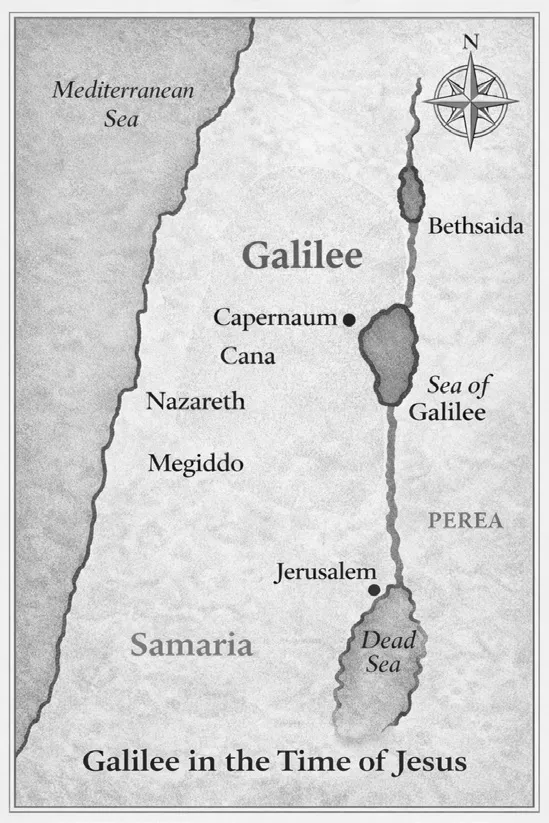
Following His encounter with the Samaritan woman, Jesus returns to Cana in Galilee and performs His second sign (v. 46). A royal official approaches Him, pleading for the healing of his seriously ill son in Capernaum (v. 47). His request is simple and urgent: “Sir, come down before my child dies” (v. 49).
The official’s faith is evident in his willingness to seek Jesus directly and to trust His power. Instead of going with him, Jesus replies, “Go; your son will live” (v. 50). This answer invites the man to place his faith in the authority of Jesus’ word, even without any visible proof. The man believes the word that Jesus spoke to him and sets out on his journey. The healing takes place at a distance. As the official returns home, his servants meet him with news that his son has recovered (v. 51). Upon inquiry, he learns that the fever left his son at the very hour Jesus had spoken (vv. 52–53). This shows that Jesus’ power goes beyond physical presence, accomplishing God’s will through His word alone.
John highlights the result that “He himself believed, along with his whole household” (v. 53). The official’s faith, strengthened through the miracle, reflects a deepening recognition of Jesus’ divine authority and prepares the way for further signs in His ministry (v. 54).
Two Signs in Cana
Section titled “Two Signs in Cana”| Turning Water into Wine | Healing the Official's Son |
|---|---|
| A request from Jesus' mother about wine | A request from a father about his son |
| A gentle rebuke, "What has this to do with me?" | A rebuke about signs and wonders |
| A sign by way of a response | A sign by way of a response |
| The disciples believe | The family believes |
The first two signs of Jesus take place in Cana. He first turns water into wine (2:1–11), demonstrating His transformative power, and then heals the official’s son (4:46–54), revealing His authority over sickness. Together, these miracles unveil His divine identity and compassion.
Preaching and Teaching the Word
Section titled “Preaching and Teaching the Word”Jesus Meets a Woman at the Well (4:1–45)
Jesus meets the Samaritan woman and offers living water that satisfies spiritual thirst. Her journey moves from curiosity to revelation as she discovers worship in spirit and truth. Explores God’s grace crossing cultural barriers and addressing personal brokenness. Like her, we seek fulfilment in many places, yet only Christ provides lasting life. His invitation remains: come and drink, and your thirst will be satisfied.
An Evangelistic Encounter (4:31–38)
Jesus’ dialogue with His disciples focuses on evangelism, a theme central to understanding the entire narrative. He models how to engage those whom society often avoids. The Samaritan woman, unlikely as an evangelist in her context, becomes a witness even before fully understanding Him. Her example encourages us to share meaningful encounters with Jesus with friends and neighbours, demonstrating that evangelism begins with authentic testimony, even amid uncertainty about doctrine or theology.
Worthy Worship (4:19–24)
The woman brings up a question about worship, seemingly as a distraction, yet Jesus responds with seriousness. In churches where opinions differ over worship styles, a sermon or Bible study on John 4:19–24 can help guide the conversation beyond outward or secondary issues, focusing instead on the deeper question of what it truly means to worship God in spirit and truth.
The Sign of Faith Beyond Sight (4:46–54)
Distance does not limit the power of Jesus’ word, as His command and promise are effective whether He is near or far. The official’s faith progresses from crisis, asking for help for his son, to obedience as he trusts Jesus’ word, and finally to confirmed faith when his household believes. This sign shows that true trust accepts God’s promise before seeing results, beginning in desperation, growing through obedience, and strengthened by evidence.